EPA strips oil and gas industry exemption on reporting hydrogen sulfide emissions
The U.S. Environmental Protection Agency (EPA) recently announced that next year it will require oil and gas companies to publicly disclose the release of hydrogen sulfide (H2S) gas, which can be deadly in high enough concentrations
Jul 31, 202035.9K Shares1.2M Views
The U.S. Environmental Protection Agency (EPA) recently announced that next year it will require oil and gas companies to publicly disclose the release of hydrogen sulfide (H2S) gas, which can be deadly in high enough concentrations.
The industry has been exempt from divulging the release of H2S to the federal Toxics Release Inventory (TRI) for 17 years. The removal of the exemption was first published in the Federal Registryin October and finalized last week. Conservation groups praised the decision.
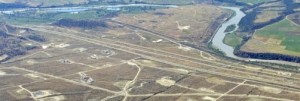
Drilling on the Roan Plateau on Colorado’s Western Slope.
“[H2S] may leak from drill rigs and refineries, but is often also deliberately burned off, exposing nearby communities to its harmful effects,” the environmental group Earthworks stated in a press release.
Hydrogen sulfide, which occurs naturally in oil and gas drilling, can sicken workers and community members who are exposed to high enough concentrations of the gas.
“Common symptoms of exposure to long-term, low levels of hydrogen sulfide include headache, skin complications, respiratory and mucous membrane irritation, respiratory soft tissue damage and degeneration, confusion, impairment of verbal recall, memory loss, and prolonged reaction time,” Earthworks warns. “Exposure to high concentrations can cause unconsciousness and can be fatal.”
The gas was a hot topic on Colorado’s Western Slopethis summer when state regulators were accused of misleading the public concerning the release of H2S at several Noble Energy natural gas wells on the Roan Plateau in 2009.
Regulators for the Colorado Oil and Gas Conservation Commission (COGCC) were accused of not being totally forthright on the issue of H2S release at Noble wells in 2009 until a whistleblower came forward.
Silt Mesa resident Carl McWilliams was a contractor for Noble when he became sick – an incident that led to a U.S. Occupational Safety and Health Administration (OSHA) fine. Another contractor died of what the coroner determined was a heart attack unrelated to H2S emissions, but McWilliams disputes that conclusion and now says he’s been ostracized by the industry.
The COGCC found that four Noble wells had H2S levels greater than 100 parts per million (PPM) in 2009, and the agency in September posted its findings on the COGCC website (pdf). In a separate fact sheet (pdf), the COGCC states that levels of between 200 and 300 PPM can lead to “marked conjunctivitis and respiratory tract irritation after 1 hour of exposure.” Levels higher than 500 PPM can lead to loss of consciousness and possibly death in 30 minutes to 1 hour.”
“Our initial priority, obviously, was to look at current circumstances and to ensure that there were not significant risks to public health, safety or welfare, and I think we satisfied ourselves that there is not,” COGCC director David Neslin told the Colorado Independent in September.
The EPA is engaged in a rulemaking processon hydraulic fracturing emissions, which has prompted threats of litigation from states such as North Dakota, where a major drilling boom is going on in the Bakken Shale.
Community activists in Colorado and elsewhere in the nation say the EPA must do more to regulatethe industry as domestic oil and gas production steadily increases in areas with more dense populations than the Western Slope of Colorado. Groups around Colorado accuse local and state regulators of dropping the ball on issues ranging from air emissions to water quality to setbacks for rigs near homes, businesses and public buildings.

Dexter Cooke
Reviewer
Dexter Cooke is an economist, marketing strategist, and orthopedic surgeon with over 20 years of experience crafting compelling narratives that resonate worldwide.
He holds a Journalism degree from Columbia University, an Economics background from Yale University, and a medical degree with a postdoctoral fellowship in orthopedic medicine from the Medical University of South Carolina.
Dexter’s insights into media, economics, and marketing shine through his prolific contributions to respected publications and advisory roles for influential organizations.
As an orthopedic surgeon specializing in minimally invasive knee replacement surgery and laparoscopic procedures, Dexter prioritizes patient care above all.
Outside his professional pursuits, Dexter enjoys collecting vintage watches, studying ancient civilizations, learning about astronomy, and participating in charity runs.
Latest Articles
Popular Articles