The Eurozone's Cash Deficit Drives Demand For The Dollar
Author:James PierceReviewer:Alberto ThompsonDec 16, 2021971 Shares161.7K Views
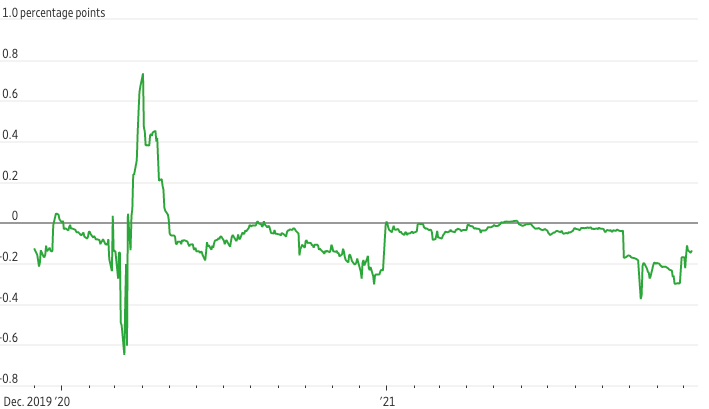
Banks in the Eurozone, flush with cash, are hurrying to convert their euros into dollars before the year is up, fueling demand for the dollar.
For three-month euro cross-currency basis swaps, the interest rates have deteriorated in recent weeks, with one side borrowing a currency and lending their own back. Traders in Europe pay a premium for exchanging surplus Euros into US Dollars due to the current volatility of the Euro.
What's The Cash Deficit About?
A surge of European Central Bank initiatives is partly to blame for the higher cost, economists and investors believe. Eurozone banks have been left with a surplus of cash as a result of the Covid-19 initiatives, which were designed to encourage lending to consumers and companies during the economic recovery.
Investment manager at Lombard Odier Investment Managers David Callahan said, "There's so much money and not enough investments to be made...
For a return of 0.05 percent, several Eurozone banks have decided to convert their euros into dollars and deposit the proceeds in the Federal Reserve's reverse repo program. There was a near-record amount of money flowing into the Fed's reverse repo program on Monday. After the Fed raised the return to 0.05 percent from 0 percent, money flowing into the facility has reached new highs this year.
More Cash To Dispose Of
Analysts estimate that banks have more cash on hand than in previous years. Targeted longer-term refinancing operations (TLTROs), as they are known at the European Central Bank, have encouraged banks to increase their borrowing from the central bank. The European Central Bank (ECB) slashed its lending interest rates to as low as -1% last year, meaning banks were compensated for borrowing.
To Mr. Callahan, this shows that banks don't want any more euros since the three-month Euribor rate has dropped to record lows in recent weeks, an indication that banks don't want additional euros on deposits. Analysts believe that the flow of money is a contributing element to the strength of the dollar and the weakening of the euro.
The Cost Of Exchange
Annually, the cost of exchanging euros for dollars rises. According to Jerôme Legras, head of research at Axiom Alternative Investments, it climbs at the end of every year because the Basel Committee on Banking Supervision, a group of global central bankers and regulators, determines the systemic importance of a bank by its year-end balance sheet.
After the new year, analysts predict that euro-to-dollar financing costs will drop. Short-term debt known as bills is likely to be more plentiful as a result of the Fed's projected tapering of its bond purchases, which will result in more locations for investors to store their surplus cash. An increase in the government's borrowing limit, or the debt ceiling, would make it possible to issue additional debt, boosting the market's supply.
As much surplus money as might be absorbed by Fed facilities and extra bill issuance will not be reduced in euro terms. There is no change in outstanding currency amounts when traders transfer currencies.

James Pierce
Author
James Pierce, a Finance and Crypto expert, brings over 15 years of experience to his writing. With a Master's degree in Finance from Harvard University, James's insightful articles and research papers have earned him recognition in the industry.
His expertise spans financial markets and digital currencies, making him a trusted source for analysis and commentary. James seamlessly integrates his passion for travel into his work, providing readers with a unique perspective on global finance and the digital economy.
Outside of writing, James enjoys photography, hiking, and exploring local cuisines during his travels.

Alberto Thompson
Reviewer
Alberto Thompson is an acclaimed journalist, sports enthusiast, and economics aficionado renowned for his expertise and trustworthiness. Holding a Bachelor's degree in Journalism and Economics from Columbia University, Alberto brings over 15 years of media experience to his work, delivering insights that are both deep and accurate.
Outside of his professional pursuits, Alberto enjoys exploring the outdoors, indulging in sports, and immersing himself in literature. His dedication to providing informed perspectives and fostering meaningful discourse underscores his passion for journalism, sports, and economics. Alberto Thompson continues to make a significant impact in these fields, leaving an indelible mark through his commitment and expertise.
Latest Articles
Popular Articles