Drought In Europe Bares Ancient Secrets, WW2 Relics
The drought in Europe brought unexpected discoveries. “Lost” villages were “found.” Dying grasses revealed hints of marvelous gardens of long ago. Rocks “warning” people. What does this drought really want to tell people?
Author:Camilo WoodReviewer:Dexter CookeAug 22, 20224.7K Shares368.7K Views
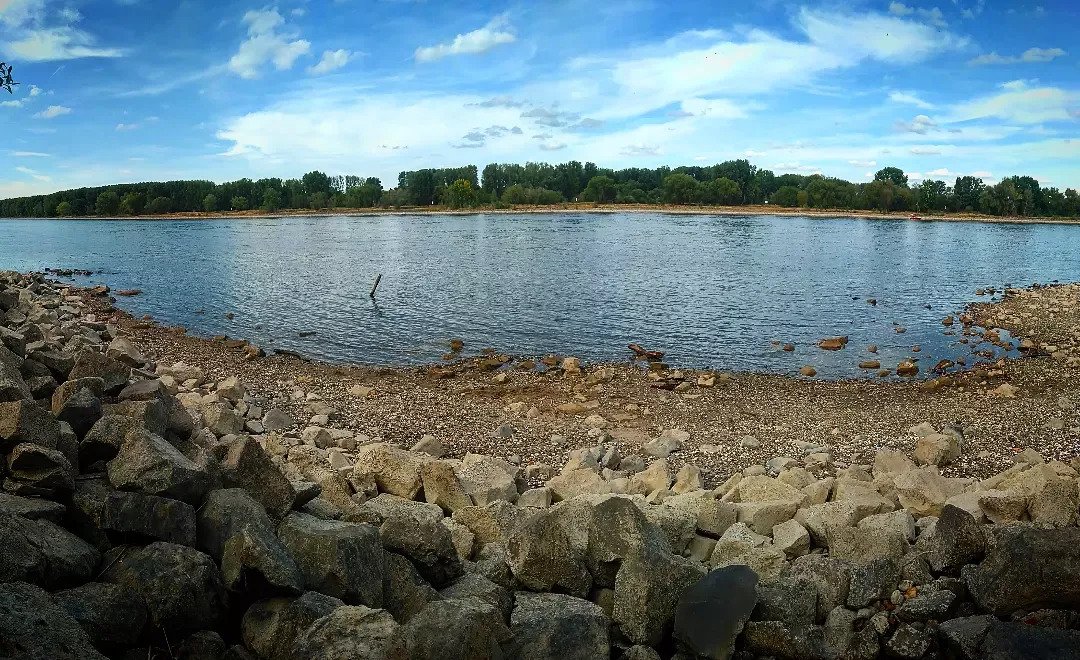
As severe drought in Europeconsiderably drains rivers and lakes across the continent, it reveals in the process fascinating things once submerged underwater.
Said things show a remarkable degree of cultural and historical significance.
From ancient ruins to carvings from yesteryears, the drying bodies of water gradually expose them.
Ships that sailed during the Second World War along with structures that were believed would never again see the light of the day became unhidden.
The current drought in Europe brings with it some interesting remnants of the past.
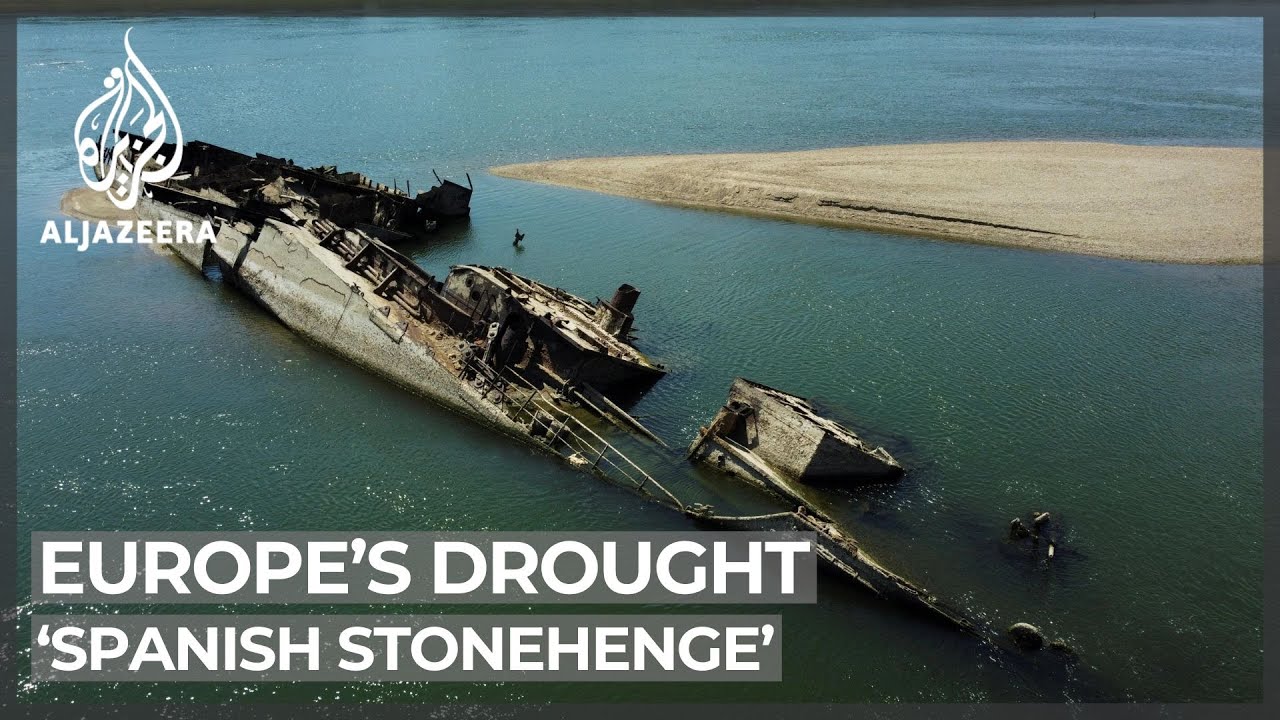
Europe’s drought exposes WWII ships, bombs and prehistoric stones
Drying, Drying . . . Voila!
Various news agencies have recently reported how the drought in Europe led to the rediscovery of nearly forgotten man-made things.
Know what they are and what value they possess.
German Warships
The Danube flows through 19 countries, demonstrating why it’s Europe’s second-longest river.
Its waters also reach the eastern Serbian village of Prahovo, where, due to the drought in Europe, sunken combat ships surfaced.
According to Reuters, those found were 20 Nazi warships from the Black Sea Fleet.
Hundreds of them sailed the waters of Danube during World War II.
The Soviet forces bombed them during a battle in 1944.
Hunger Stones
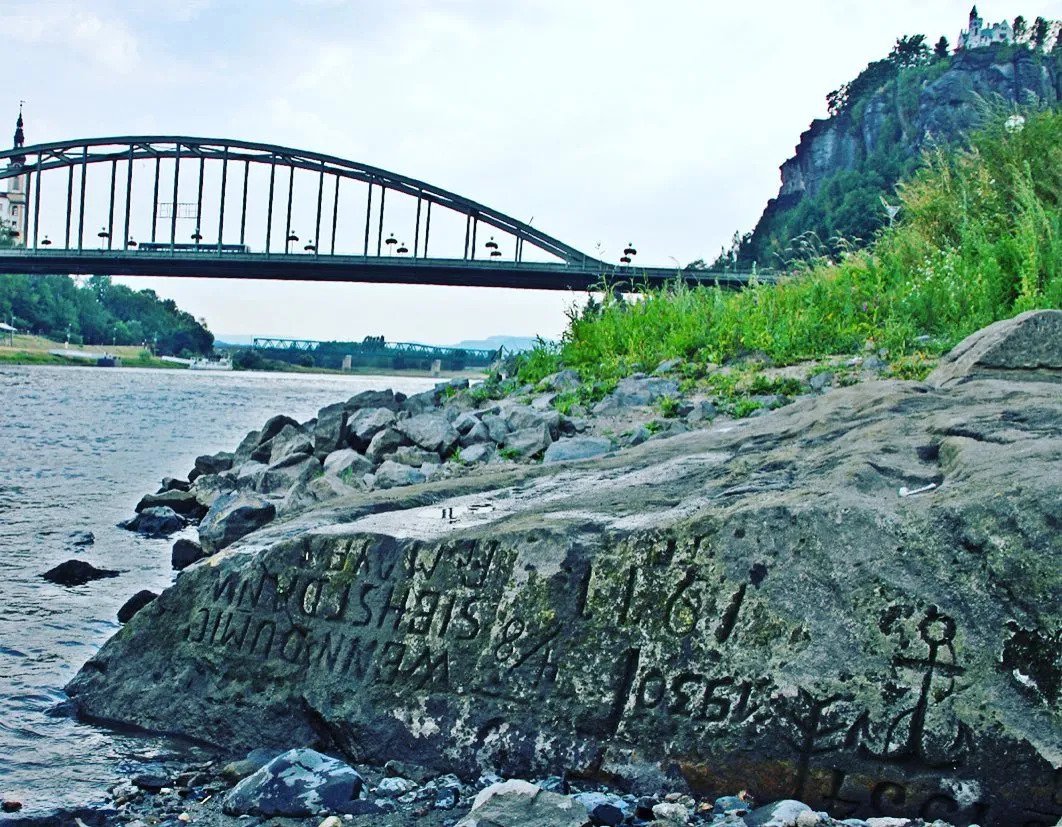
These stones show messages carved on them.
Inscriptions from one rock, according to the Smithsonian Magazine, tell of foodscarcity, hunger, and poor harvest during a drought.
It’s like stumbling upon someone’s very old Facebook post.
Apparently, people were able to inscribe them because the water level was also extremely low at that time.
With the ongoing drought in Europe, over 20 of these so-called hunger stones became visible in the Elbe River.
They are specifically found in the riverbed in Decin, a municipality in the northwestern part of the Czech Republic.
Lost Church
In September 1945, King George VI led the opening of the Ladybower Reservoir.
It’s nestled in Upper Derwent Valley in the Peak District National Park in England.
This artificial reservoir conceals two villages underneath: Ashopton and Derwent.
The drought in Europe encouraged the people and tourists there to see the ruins of Derwent’s church and the remains of its railway.
Lost Villages
Two more lost villages reappeared because of the drought in Europe.
One was Aceredo, a Spanish village in the region of Galicia.
It came out after 30 years of being submerged in a reservoir.
The second one was the German village of Berich, which the locals dubbed as the “Atlantis of Lake Eder.”
After 100 years of being underwater, its ruins can be seen again, along with the remaining walls of a 12th-century Benedictine convent.
Lost Gardens
When Europe’s scorching weatherkilled the grass, lo and behold, traces of once magnificent gardens in England came into sight.
These traces became apparent in Longleat House in Wiltshire, indicating a 17th-century garden.
Another was Lydiard Park in Swindon, with 250-year-old “imprints,” according to the BBC.
Nero’s Bridge
The drought in Europe also brought out what looks like a mundane rock formation in Tiber, Italy’s third-longest river.
It’s found near the Vittorio Emanuele II, a bridge in Rome named after the King of Sardinia (1820-1878).
Those rocks are the ruins of an ancient bridge.
BBC reported that Emperor Nero could have possibly ordered its construction in 50 AD.
Spanish Stonehenge
Reuters reported that the drought in Europe also affected a reservoir in Caceres, Spain.
It caused the water level of the Valdecanas reservoir to plunge “to 28 percent of capacity.”
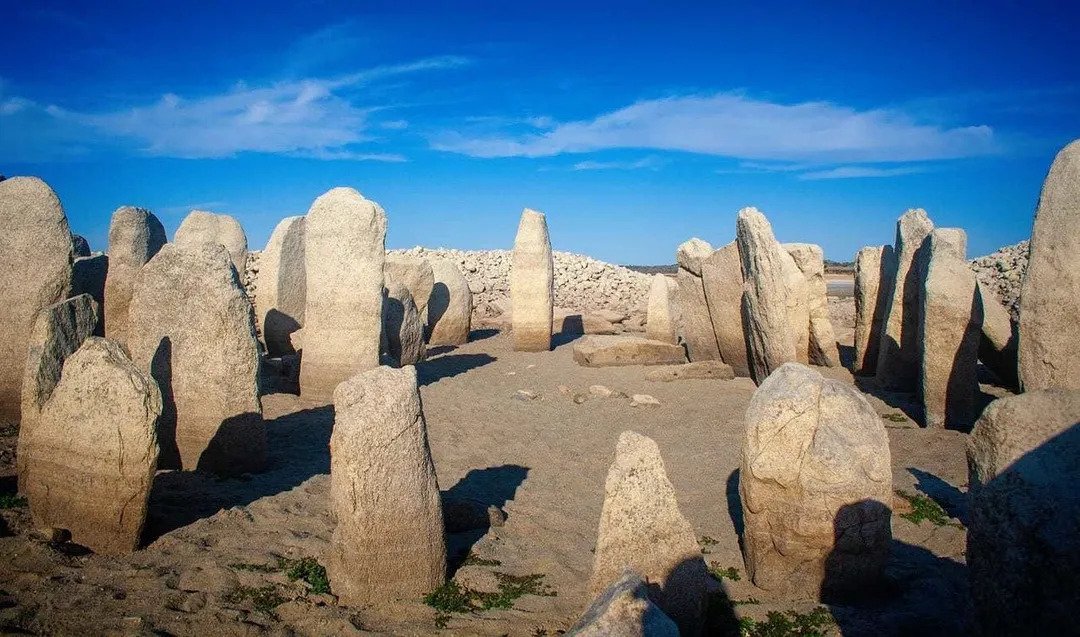
The good news is that it revealed the Dolmen of Guadalperal, believed to have existed since 5000 BC.
It’s also called Spanish Stonehenge because of its similarity to England’s Stonehenge in Wiltshire as an intriguing rock formation.
In 1963, the area where it’s located got flooded.
The things that the drought in Europe exposed don’t always amount to something noteworthy.
BBC, for example, reported about a massive bed of rock appearing as the water levels of Italy’s largest lake, Lago di Garda (Lake Garda), went down.
Nothing cultural or historical with its emergence, except for the sheer visual appeal it brings.
Global Warming As Culprit?
This drought in Europe, according to Time as well as other news sites, “could be the worst drought in 500 years.”
That’s what the experts said.
They also associated it with global warming.
National Geographic Society offers this definition:
“„Global warming is the long-term warming of the planet’s overall temperature.
Climate change is its byproduct.
Those affected rivers and lakes by the drought in Europe include the following:
- Lake Velence (Budapest, Hungary)
- Loire and Rhone (rivers in France)
- Po (Italy’s longest river)
- Rhine River (Cologne, Germany)
- Sava River (Zagreb, Croatia)
- Waal River (Nijmegen, Netherlands)
Drought, Drought, Go Away
While the drought in Europe provoked worry among scientists, it likewise indirectly set off a certain level of thrill among other people.
Not that they deliberately delight in this major environmental concern, but these people would welcome this aspect of the drought.
For archaeologists, historians, antiquarians, and academics, there would still be some reasons to rejoice a bit.
Still, looking at the bigger picture, this drought in Europe should not go on any longer.

Camilo Wood
Author
Camilo Wood has over two decades of experience as a writer and journalist, specializing in finance and economics. With a degree in Economics and a background in financial research and analysis, Camilo brings a wealth of knowledge and expertise to his writing.
Throughout his career, Camilo has contributed to numerous publications, covering a wide range of topics such as global economic trends, investment strategies, and market analysis. His articles are recognized for their insightful analysis and clear explanations, making complex financial concepts accessible to readers.
Camilo's experience includes working in roles related to financial reporting, analysis, and commentary, allowing him to provide readers with accurate and trustworthy information. His dedication to journalistic integrity and commitment to delivering high-quality content make him a trusted voice in the fields of finance and journalism.

Dexter Cooke
Reviewer
Dexter Cooke is an economist, marketing strategist, and orthopedic surgeon with over 20 years of experience crafting compelling narratives that resonate worldwide.
He holds a Journalism degree from Columbia University, an Economics background from Yale University, and a medical degree with a postdoctoral fellowship in orthopedic medicine from the Medical University of South Carolina.
Dexter’s insights into media, economics, and marketing shine through his prolific contributions to respected publications and advisory roles for influential organizations.
As an orthopedic surgeon specializing in minimally invasive knee replacement surgery and laparoscopic procedures, Dexter prioritizes patient care above all.
Outside his professional pursuits, Dexter enjoys collecting vintage watches, studying ancient civilizations, learning about astronomy, and participating in charity runs.
Latest Articles
Popular Articles