Explore Montana's Ghost Towns
During the late 1850s prospectors discovered the first significant Montana gold strike at Benatsee Creek, north of the Deer Lodge Valley; by the turn of the century thriving boomtowns were scattered throughout the state. When the gold disappeared, so did the people. What remains of the once wild and roaring mining camps are a number of historic Ghost Towns.
Author:Tyreece BauerReviewer:Karan EmeryOct 10, 202392.1K Shares1.2M Views
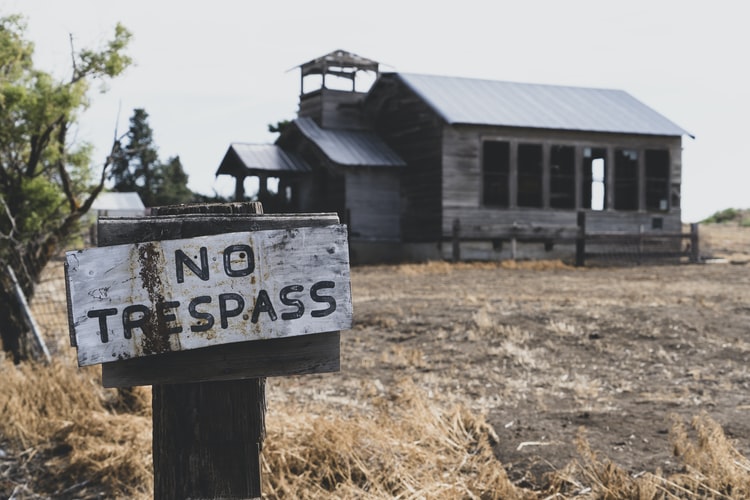
At the end of the 1850s, prospectors uncovered the first major Montana gold strike at Benatsee Creek, north of the Deer Lodge Valley; by the turn of the century, prosperous boomtowns were spread across the state. When the gold went missing, so did the citizens. A number of historic Ghost Towns exist of the once wild and roaring mining camps.
Bannack
Bannack State Park is a designated historic monument and the site of Montana's first major discovery of gold on July 28, 1862. There are more than 50 houses on the Main Street line with their historic log and frame structures. Bannack is unusual in that all the structures are well maintained, not the buildings that have been returned to their historic level.
The path between Bannack and Virginia City was the scene of more thefts, robberies and murders than almost any other comparable stagecoach line. The outlawed gang had Henry Plummer, the Sheriff of Bannack, as its mastermind. Plummer worked the strings that ended up with more than a hundred killings and a bonanza of money and jewels seized from poor scenic tourists.
He was finally found out, and a committee of people formed, who called themselves the Vigilantes, and thrown him into his own dungeon. His stay was brief, just enough for the gallows to be erected in the back of the saloon and the dishonest sheriff, and his two deputies were quickly strung up.
Laurin - Alder Gulch
Laurin is best known for it's Hanging Tree, where many of Plummer's gangs were hanged. The town was founded around a trading post owned by the Frenchman, Jean Baptiste Laurin. Laurin's store prospered because of the provisions for the miners and the furs exchanged with the Indians. Laurin was also called Cicero, or Lorraine.
Laurin was a production hub for the rich Alder Gulch strike, which extracted more than $100,000,000 in gold between 1897 and 1922. It is said that Laurin owned all the markets, bridges, and most of the ranches, sheep, horses, and mules within fifty to one hundred miles of the valley. He was also a money lender charging between twelve and thirty-six per cent of unsecured loans. Jean Baptiste Laurin's net worth is said to have been around $500,000 in 1800s money.
The site of the largest placer gold strike in world history was discovered in Alder Gulch in May 1863 by prospectors returning to Bannack after they were waylaid by Indians.
Today, Alder has a gem mine open to the public. Folks can go just south of town to search for garnets and other stones. About five miles north of the town is Robber's Roost, an old stage stop frequented by Plummer's Gang and other stagecoach robbers.. It is open to the public and features an antique store and museum.
Nevada City
Nevada City was a mining ghost town until the Bovey family restored it between 1945 and 1978. The entire town of Nevada City is a historical museum. Today it is a famous tourist attraction with many original log buildings and an outstanding collection of old-time music boxes, player pianos and calliopes. A narrow rail system that links Nevada City and Virginia City, runs with a fully restored 1910 Baldwin Steam Locomotive on weekends and a smaller train weekdays. The trains operate from Memorial Weekend through Labor Day.
Granite Ghost Town
In the autumn of 1872, a prospector called Holland discovered the Granite mine. The mine was moved in 1875. This was the richest silver mine on earth, and it could never have been found if a telegram from the east had not been postponed. The miners thought the enterprise was futile and called an end to its activity, but the last blast on the last shift revealed a bonanza, which yielded $40,000,000 in silver.
Today there is no one living in the camp. The shell of the Miners' Union Hall still stands, but the roof supports have caved to the bottom floor. The third-floor dance hall, second-floor union offices, and ground-floor saloon/café are about to collapse together. The company hospital still stands.
Coloma
Coloma is a couple of miles north of Garnet at the end of a trail lined with boulders. Mines near the site still remain, some containing possibly profitable deposits are sometimes mined in the summer. The structures are dated by old newspapers and mail in catalog orders from the 1920's and 1930's, which were commonly used as insulation in the cabin walls. Still standing are mining shafts, rusting ventilation systems, pumping machines, and the remains of narrow-gauge railroad tracks.
Coloma is an abandoned gold mine in the U.S. state of New Mexico. There was some activity in 1896 and 1916 but the mines were unprofitable. Most of the gold was reported to have been mined, but most of it was lost in tailings. The survey team aborted their research.
It is still very difficult to find any information about Coloma. Nearby residents claim they know nothing of the site, and refuse to answer any questions. Speculation has developed two conclusions: either the failures are so embarrassing no one wants to remember, or there are still discoveries to be found that no one wishes to expose.

Tyreece Bauer
Author
A trendsetter in the world of digital nomad living, Tyreece Bauer excels in Travel and Cybersecurity. He holds a Bachelor's degree in Computer Science from MIT (Massachusetts Institute of Technology) and is a certified Cybersecurity professional.
As a Digital Nomad, he combines his passion for exploring new destinations with his expertise in ensuring digital security on the go. Tyreece's background includes extensive experience in travel technology, data privacy, and risk management in the travel industry.
He is known for his innovative approach to securing digital systems and protecting sensitive information for travelers and travel companies alike. Tyreece's expertise in cybersecurity for mobile apps, IoT devices, and remote work environments makes him a trusted advisor in the digital nomad community.
Tyreece enjoys documenting his adventures, sharing insights on staying secure while traveling and contributing to the digital nomad lifestyle community.

Karan Emery
Reviewer
Karan Emery, an accomplished researcher and leader in health sciences, biotechnology, and pharmaceuticals, brings over two decades of experience to the table. Holding a Ph.D. in Pharmaceutical Sciences from Stanford University, Karan's credentials underscore her authority in the field.
With a track record of groundbreaking research and numerous peer-reviewed publications in prestigious journals, Karan's expertise is widely recognized in the scientific community.
Her writing style is characterized by its clarity and meticulous attention to detail, making complex scientific concepts accessible to a broad audience. Apart from her professional endeavors, Karan enjoys cooking, learning about different cultures and languages, watching documentaries, and visiting historical landmarks.
Committed to advancing knowledge and improving health outcomes, Karan Emery continues to make significant contributions to the fields of health, biotechnology, and pharmaceuticals.
Latest Articles
Popular Articles