Government Workforce Summit 2025: AI, Leadership, And The New Mission Of Public Service
On September 11, the Walter E. Washington Convention Center hosted the Government Workforce Summit 2025, organized by the Association for Talent Development (ATD) - the world’s largest professional association for workforce development.
Author:Tyreece BauerReviewer:Elisa MuellerSep 13, 20258.7K Shares117.9K Views
On September 11, the Walter E. Washington Convention Center hosted the Government Workforce Summit 2025, organized by the Association for Talent Development (ATD)- the world’s largest professional association for workforce development.
The central theme this year: how government can adapt to rapid change and build the workforce of the future.
As U.S. agencies undergo sweeping transformations - from digitalization and regulatory reforms to a generational shift in the workforce - questions of resilience and effectiveness are taking center stage. Thousands of employees are leaving through voluntary separation programs, while new technologies demand a rethinking of roles and competencies. That’s why the Government Workforce Summit 2025felt more urgent than ever: the nation needs leaders and HR experts capable of keeping teams engaged, adapting them to change, and shaping the future of public service.
Against this backdrop, the Summit became a platform for hands-on dialogue. Throughout the day, speakers and participants explored how technology, artificial intelligence, and human capital strategies can converge to create a truly mission-ready workforce.
Key Sessions And Takeaways
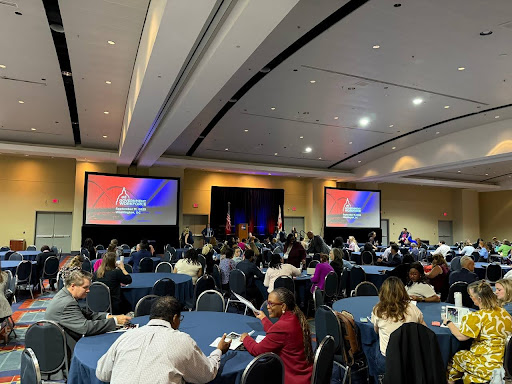
The Summit brought together hundreds of specialists from across the country to ask: what should government look like in an era of constant disruption? Participants engaged in packed panels and plenary discussions.
- Col. Kris Saling(Director of Innovation, Army Talent Innovation, ASA for Manpower and Reserve Affairs, U.S. Army) opened the event with “More Than a Number: Why the Future of the Workforce Is Personal.” Her message was clear: it’s not enough to count employees - leaders must understand their potential, skills, and individual contributions.
- Dr. Michael Dorsey(Senior Training and Development Administrator, Maryland Department of Transportation) and Terrance Blackman Stroud (Deputy Commissioner, Training & Workforce Development, NYC Department of Social Services) highlighted how cross-sector collaboration - government, academia, nonprofits, and local communities - can become a catalyst for innovation.
- Mika J. Cross, CEO & Founder of Strategy@Work, closed the day with a powerful call to action: emotional intelligence, clarity of purpose, and the ability to guide teams through turbulent change are now essential qualities for public sector leaders.
Educational panels also tackled emerging issues: future skills, skills-based talent management, the role of AI in training, and technology modernization.
Expert Insights
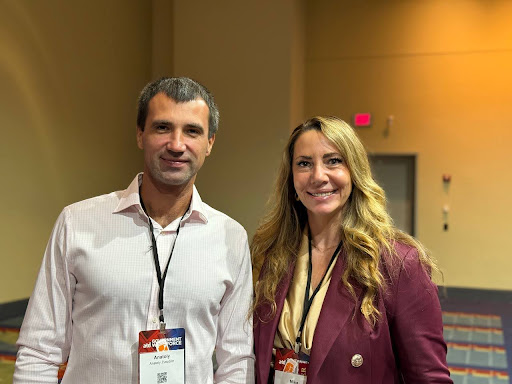
We spoke with Anatoly Zvezdilin, a member of ATD and workforce development expert, to hear his perspective on the standout sessions and trends shaping government work.
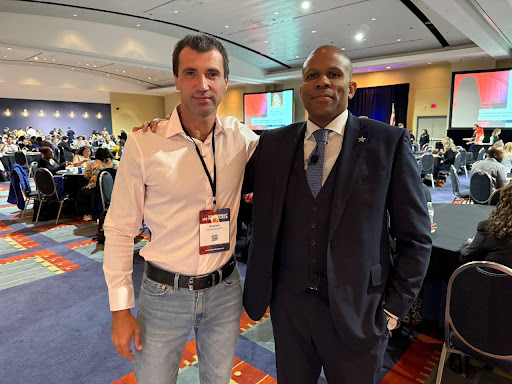
- Colonel Kris Saling stressed that employees are more than just numbers. Anatoly, how did that message land with you?
“She’s absolutely right. For me, this was one of the Summit’s most important signals - a shift away from treating employees as statistics and toward understanding their unique competencies. Personalized workforce strategies aren’t just buzzwords; they’re real tools for improving efficiency. In my own research, I’ve seen that personalization drives engagement and better decision-making. It’s a fundamental shift in how public institutions must think about people.”
- AI was another big topic. How real is its impact on workforce management right now?
“AI is already a practical tool. What excites me most is how it enables personalized learning paths. Training programs can now adapt to the individual, which is a huge leap forward for public service. I was also pleased to see ethics front and center in these discussions. The trend is clear: automate planning, predict workforce gaps - but do it responsibly and never lose sight of the human factor. That’s what maturity looks like. For comparison, Russia is experimenting with AI in public services too, but the focus there is still largely technical. In the U.S., the approach feels more systemic and ethically grounded, which makes a big difference.”
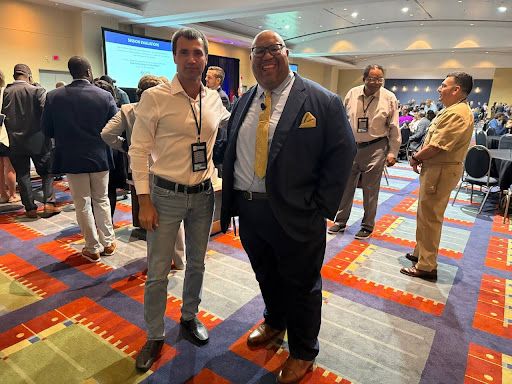
- Cross-sector cooperation came up often. From your perspective, Anatoly, what does that mean in practice?
“The Dorsey and Stroud presentation made it crystal clear: government can’t operate in isolation anymore. Agencies are teaming up with universities on digitalization research, partnering with tech companies to roll out AI, and involving nonprofits in social projects. The problem, though, is the gap between the speed of innovation in the private sector and the inertia of government. Bureaucratic processes often slow integration.”
- What do you think is still missing to accelerate this cooperation in the public sector?
“Three things. First, streamline the bureaucracy that stifles initiative. Second, build a trusted environment where agencies, academia, and business can actually share data and knowledge. And third, create national platforms where collaboration happens continuously, not just ad hoc. Without those elements, synergy remains local and never scales system-wide.”
- Would you say the absence of a national platform is the biggest barrier?
“Partly, yes. In the U.S., workforce policy, digitalization, and partnerships with universities often depend on individual states. That decentralization brings flexibility, but it also slows the spread of best practices. With technology evolving so fast, there’s no time for drawn-out adaptation. Federal-level solutions are urgently needed to unite states, government, academia, and business in one collaborative infrastructure.”
- One of the panels explored preparing the next generation of leaders. What stood out to you as truly innovative?
“The session hit the nail on the head: who replaces today’s leaders tomorrow, and how do we prepare them? Beyond the classics - mentoring, rotations, targeted programs - two innovations stood out. First, reverse mentoring: young professionals teaching senior colleagues digital skills and new communication tools. That breaks down generational barriers and makes knowledge transfer two-way. Second, AI-driven career navigation: systems that map an employee’s skills, goals, and organizational needs, then build a personalized roadmap of training, rotations, and projects. It turns career development from guesswork into a guided journey.”
- And when it comes to younger talent - what’s the real challenge?
“Retention isn’t enough anymore. Young professionals want speed, flexibility, and meaning. Traditional courses or internships don’t cut it. Private companies in the U.S. have long used stretch assignments - giving employees projects just beyond their current skill level, often leading small teams under a mentor’s guidance. In a few months, they gain years of experience. If government adopts these practices, we can grow leaders faster - people who start tackling real management challenges from day one, instead of waiting years for their turn.”
- Mika J. Cross closed with a focus on emotional resilience and clarity. How do you assess her message?
“I think it was one of the Summit’s strongest points. We talk so much about technology and AI, but at the end of the day, it’s people who lead teams through change. Her message was that leaders must be not just strategists, but emotional navigators - able to project confidence and clarity even in unstable environments. My own research shows that a leader’s emotional maturity is often what determines whether a team thrives in uncertainty. We’re used to relying on control, regulations, and KPIs. But without resilient, inspiring leaders, no digital reform will truly succeed. I believe the ‘human side of leadership’ will become the defining theme in training tomorrow’s public sector executives.”
- Finally, Anatoly, what’s your overall impression of the Summit?
“The atmosphere was packed and highly practical. This wasn’t just a series of lectures - it was a showcase of real practices already being applied inside government agencies. The Summit was an incredible opportunity not only to share knowledge but also to see how technology, real-world cases, and cross-sector collaboration are shaping the future of U.S. public service. I’d say we got a glimpse of what government will look like five to ten years from now: more digital, more adaptive, and more open to partnerships. Events like this will be accelerators of change, because they connect strategy with real tools.”

Tyreece Bauer
Author
A trendsetter in the world of digital nomad living, Tyreece Bauer excels in Travel and Cybersecurity. He holds a Bachelor's degree in Computer Science from MIT (Massachusetts Institute of Technology) and is a certified Cybersecurity professional.
As a Digital Nomad, he combines his passion for exploring new destinations with his expertise in ensuring digital security on the go. Tyreece's background includes extensive experience in travel technology, data privacy, and risk management in the travel industry.
He is known for his innovative approach to securing digital systems and protecting sensitive information for travelers and travel companies alike. Tyreece's expertise in cybersecurity for mobile apps, IoT devices, and remote work environments makes him a trusted advisor in the digital nomad community.
Tyreece enjoys documenting his adventures, sharing insights on staying secure while traveling and contributing to the digital nomad lifestyle community.

Elisa Mueller
Reviewer
Elisa Mueller, a Kansas City native, grew up surrounded by the wonders of books and movies, inspired by her parents' passion for education and film.
She earned bachelor's degrees in English and Journalism from the University of Kansas before moving to New York City, where she spent a decade at Entertainment Weekly, visiting film sets worldwide.
With over 8 years in the entertainment industry, Elisa is a seasoned journalist and media analyst, holding a degree in Journalism from NYU. Her insightful critiques have been featured in prestigious publications, cementing her reputation for accuracy and depth.
Outside of work, she enjoys attending film festivals, painting, writing fiction, and studying numerology.
Latest Articles
Popular Articles