The Man Who Stayed: How Adam Castillo Led Through Collapse And Found A Voice In Crisis
In February 2021, as the military seized control and the country descended into chaos, foreign nationals evacuated, businesses shut down, and institutions unraveled almost overnight. For many, leaving was the only rational decision.
Author:Paolo ReynaReviewer:Iram MartinsApr 04, 20262K Shares30.1K Views
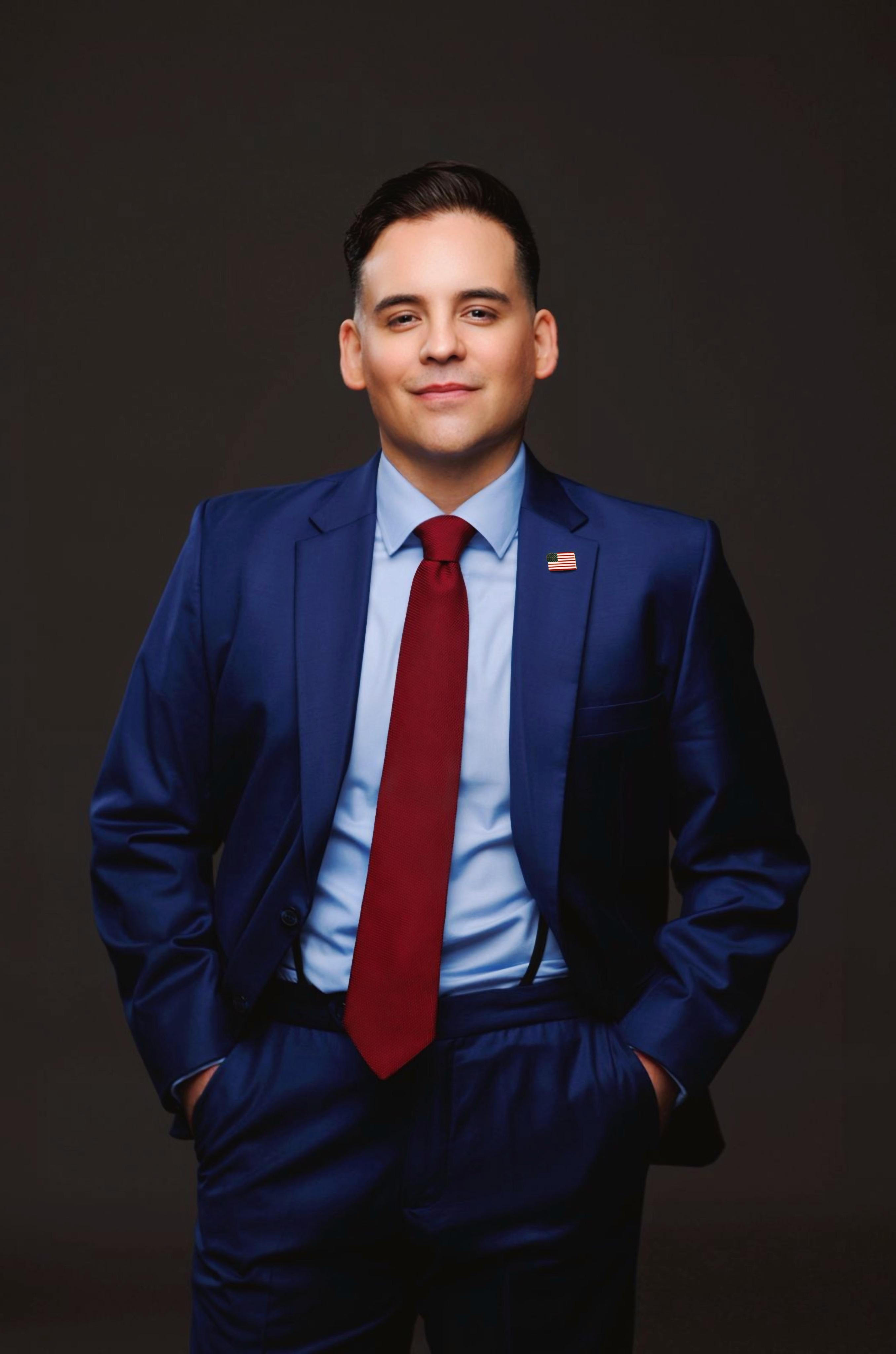
When Myanmar collapsed, most people left.
Adam M. Castillostayed.
In February 2021, as the military seized control and the country descended into chaos, foreign nationals evacuated, businesses shut down, and institutions unraveled almost overnight. For many, leaving was the only rational decision.
Castillo made a different one.
A former U.S. Marine and the founder of AGS Myanmar, a security and risk advisory firm, he had spent more than a decade building a life and business in the country. When the coup hit, that foundation was tested in ways few leaders ever experience. Blackouts became routine. Violence escalated. Supply chains fractured. Reliable information disappeared.
And yet, Castillo remained on the ground, not only sustaining his business operations but stepping into a broader leadership role as President of the American Chamber of Commerce in Myanmar.
“Leaders stay. They don’t run,” Castillo says. “That’s the cost of leadership. If you want to be a real leader, understand this. Your people are always watching you. Your actions. The example you set day in and day out. So when things get hard, they don’t expect excuses. They expect you to lead. Leadership has a price, and you either pay it or you don’t deserve the title. If you’re not willing to stand your ground, step aside and follow.”
What followed was not just a business challenge. It was a test of leadership in its most stripped-down form: no systems, no safety net, no clear authority.
Leadership Without A System
Castillo’s experience in Myanmar represents a kind of leadership rarely discussed in traditional business circles.
There were no functioning institutions to rely on. No predictable policy environment. No safety nets beyond what individuals were willing to take responsibility for.
In that vacuum, leadership became less about strategy and more about presence.
Decisions had to be made quickly, often with incomplete or unreliable information. Communication, he found, became one of the most critical tools available.
“People don’t just need answers in a crisis. They need clarity,” Castillo says. “People are tribal by nature. They need a leader to stand up in the middle of the tribe and say, ‘This is where we are, and this is where we need to go.’
This realization became the foundation of what would later become his book, Finding Our Voice.
A Book Born In Crisis
Unlike most leadership books, Finding Our Voice: A Story of Leadership in Crisis and the American Spirit Abroadwas not written in hindsight.
It was built in real time.
The book is structured around twelve speeches Castillo delivered during the crisis, each marking a key moment in the evolution of both the situation on the ground and his own leadership
Each speech served a purpose: to steady a community, to interpret rapidly changing events, and to provide a sense of direction when none existed externally.
What emerges is not just a memoir, but a blueprint for leading under extreme pressure.
“My people needed direction,” he says.”That is why I built my leadership around speeches. Twelve of them to be precise.. Twelve moments in time to mark milestones that defined our path. Each one gave direction, gave vision, and most importantly, united a forgotten people around a shared purpose.”
The Cost Of Staying
Choosing to stay in Myanmar was not without consequences.
Castillo faced reputational attacks, political pressure, and the constant uncertainty of operating in a conflict environment. As narratives around the crisis formed in Washington and international media, he often found himself at odds with prevailing assumptions about what was happening on the ground.
“Washington, D.C. is filled with so-called ‘Burma’ or Myanmar policy experts and advocates,” Castillo notes. “All of them are losers.Why? Because after decades of their efforts, Myanmar is poorer, and the same military they claim to oppose is stronger. Myanmar rarely receives sustained attention in U.S. foreign policy, and when it does, it is reduced to soundbites, posturing, and symbolic gestures that may make these same advocates feel good but change nothing on the ground.For some in Congress, it is about checking a box, adding a line to a résumé, or performing morality for future political gain. For others, it is about appealing to a small diaspora constituency. But none these actions or statements reflect the updated reality on the ground. These destructive policies, built on sanctions, have failed for generations to stop the Myanmar military. Instead, they have stripped ordinary people of what little economic opportunity they had left.”
That disconnect, he argues, shaped much of the international response to Myanmar and continues to influence how the situation is understood today.
Castillo’s perspective comes from being on the ground, not from theory. Since Myanmar’s crisis began in 2021, Castillo has led the production of thousands of pages of conflict analysis through AGS Myanmar, tracking security, economic, and political developments in real time while advising organizations on how to operate in an increasingly unstable environment.
Why Myanmar Matters More Than People Think
For many Americans, Myanmar feels distant. A geopolitical footnote.
Castillo sees it differently.
He argues that what happened in Myanmar is not isolated, but indicative of broader global shifts, particularly the growing influence of China in regions where Western engagement has receded.
As U.S. policy leaned heavily on sanctions and symbolic statements, China took a more pragmatic approach, focusing on border stability, economic investment, infrastructure under the Belt and Road Initiative (BRI), and control over critical mineral supply chains. The result, Castillo argues, is a country that has moved firmly into China’s “iron grip.”
“China has won. They are the biggest winners of Myanmar’s crisis,” he says. “While the United States stepped back and moralized, China stepped in and beat us in a game we didn’t even realize we were playing. Why? Because China has been, and will continue to be, the most reliable partner not just for the Myanmar military, but for armed groups across the country. The United States talks. China delivers. Chinese companies working in infrastructure and energy projects can literally loss money because the CCP will subsidize them. The United States cannot force its companies to do that, and American firms would not sign up for it anyway. It’s a rigged game at this point, in China’s favor. Yet, as I wrote in my book, just because we have lost Myanmar to Beijing does not mean we have to abandon it to them.”
A Different Kind Of Leadership Story
At its core, Finding Our Voice is not just about Myanmar.
It is about what happens when the systems people depend on fail.
Castillo’s journey traces a path from uncertainty to clarity, from reaction to responsibility. It reflects a belief that leadership is not defined by position, but by action, particularly in moments when there is no one else to step forward.
The book also marks a transition point in his own life.
What began as a mission to support a business community through crisis evolved into something broader: a platform to engage in larger conversations about leadership, policy, and the role of the United States in an increasingly unstable world.
Looking Ahead
As Castillo brings Finding Our Voice to a wider audience, his focus is shifting from documenting the past to applying its lessons to what comes next.
He is stepping into America’s public discourse with a focus on leadership, foreign policy, and how global instability shapes challenges at home. His perspective is grounded in experience where leadership is tested in real time.
As uncertainty grows in America’s political future, the need for decisive leadership is no longer distant. It is here.
For Castillo, the question is no longer where he can make an impact, but how. The answer is increasingly leading him home to America.
“Myanmar is no longer mine to fix. I gave twelve years of my life to its cause, and I have come to accept that its future must be shaped by its own people. I may have helped set an example, but this is their crisis to solve. Not mine. Not even the United States. The responsibility is theirs.
Now I turn to my own future. Myanmar will always be part of my story, but my focus is shifting home to California, to the communities that raised me, where I played football, went to church, went to college. These are my people.
In Myanmar, I helped people who had lost belief in themselves find it again. I saw what happens when hope returns and people stop being ashamed of where they come from.
And so, I want to help my own community awaken and believe in California again.
We are Californians after all. That used to mean something. It can again.”

Paolo Reyna
Author
Paolo Reyna is a writer and storyteller with a wide range of interests. He graduated from New York University with a Bachelor of Arts in Journalism and Media Studies.
Paolo enjoys writing about celebrity culture, gaming, visual arts, and events. He has a keen eye for trends in popular culture and an enthusiasm for exploring new ideas. Paolo's writing aims to inform and entertain while providing fresh perspectives on the topics that interest him most.
In his free time, he loves to travel, watch films, read books, and socialize with friends.

Iram Martins
Reviewer
Iram Martins is a seasoned travel writer and explorer with over a decade of experience in uncovering the world's hidden gems. Holding a Bachelor's degree in Tourism Management from the University of Lisbon, Iram's credentials highlight his authority in the realm of travel.
As an author of numerous travel guides and articles for top travel publications, his writing is celebrated for its vivid descriptions and practical insights.
Iram’s passion for cultural immersion and off-the-beaten-path adventures shines through in his work, captivating readers and inspiring wanderlust.
Outside of his writing pursuits, Iram enjoys learning new languages, reviewing films and TV shows, writing about celebrity lifestyles, and attending cultural festivals.
Latest Articles
Popular Articles