From Ideas To Visuals: How AI Is Transforming Image Creation
Often the concept is visual and starts just with one or two words. A designer may be inspired by a particular scene, a marketer needs an image for his or her campaign, or a content creator wants a unique illustration for a video.
Author:Gordon DickersonReviewer:Darren McphersonSep 25, 20263 Shares56 Views
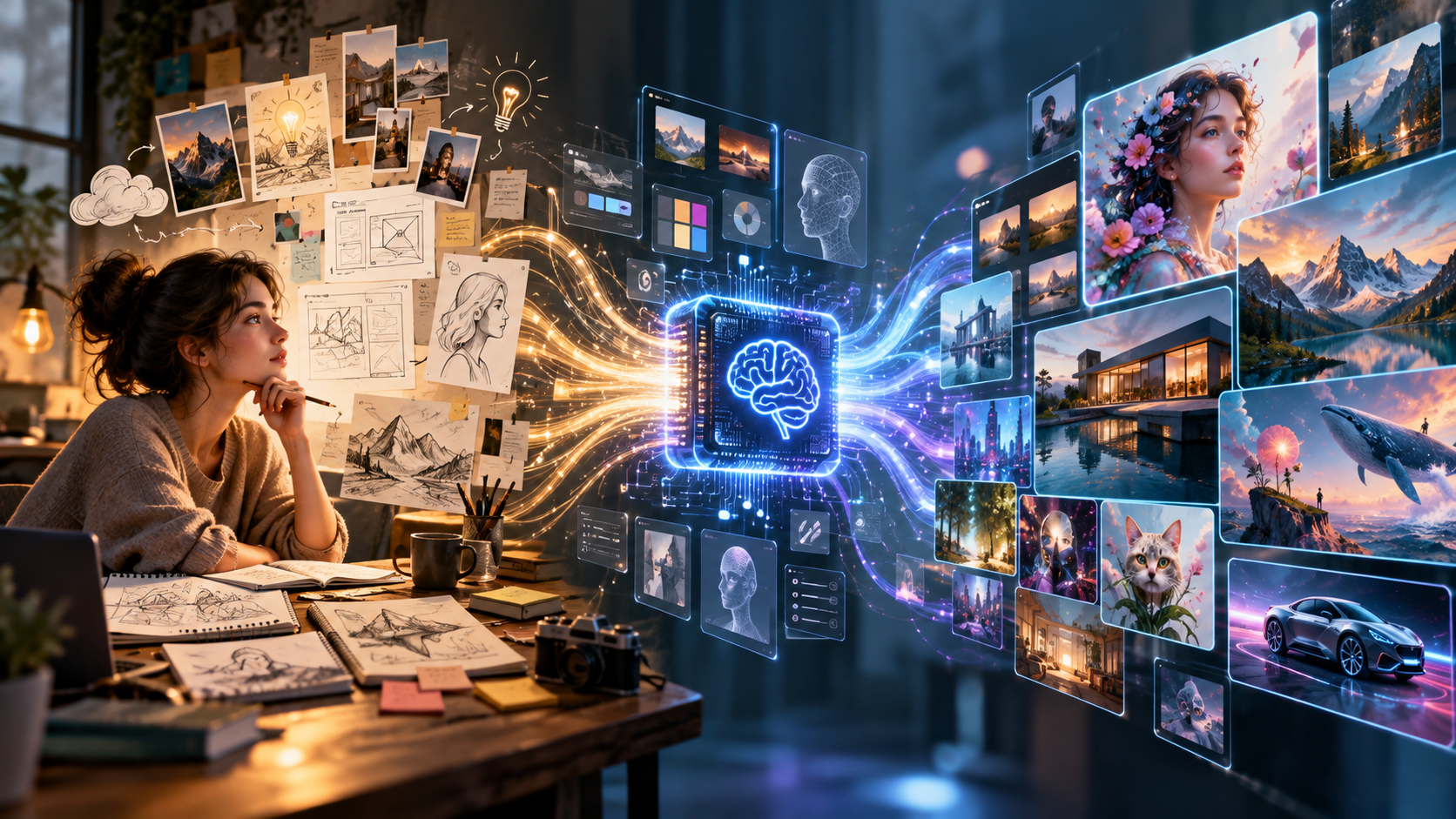
Often the concept is visual and starts just with one or two words. A designer may be inspired by a particular scene, a marketer needs an image for his or her campaign, or a content creator wants a unique illustration for a video. In order to turn that concept into an image traditionally has required use of design programs, technical skills and lots of time.
AI is opening up new ways to get images, it seems. No need to manually create every aspect of the image anymore, instead, the user can just describe the desired image and AI will generate a first version of the image from that description. This generated image can then be further polished, changed and combined with the other elements of a creative work.
The way visual content is being dealt with is definitely changing, and it is more pronounced at the beginning of a creative process.
The Shift From Manual Creation To AI-Assisted Design
In the traditional creative process, the first step was usually to start working on a piece that is completely blank. The creative people would decide what sizes they want. They will also get the pictures and stuff that fit and then put everything together slowly.
With AI-supported tools, it's the description of the person or the idea that sets a person off on the creative journey. An assistant software then tries to render the scene that is being imagined in the user's mind to a visual piece.
This does not devalue design skills but it changes where the design skills come into play. For instance the designer might have fewer sessions producing the rough drawing and will most probably use the remaining hours analyzing useful ideas and ways of polishing the rough drafts.
This can be a great benefit for small teams and individual artists as it would allow them to visually explore different possibilities very easily.
Turning Written Descriptions Into Images
The idea of giving instructions through text is that it allows the user to convey to the visual generation model clearly the content they want. A prompt may be a list of elements like place, figure, mood, lighting, layout or artistic style.
For instance, take a travel blog writer who wants to create an article about winter vacation spots. Instead of spending hours going through numerous stock images, she could just say: it's a snowy mountain village, the sun rises over the snow-covered peaks, and everything feels calm and peaceful.
AnAI image generatorcan help convert that description into a visual idea that can be checked or modified in the end for the project.
The main point is that the picture made is frequently only the starting point. The artist then makes the decision about whether the outcome actually conveys the intended idea or not.
Useful Applications Across Different Types Of Content
AI-generated visuals offer great flexibility and they can be used by different kinds of creators in different ways depending on the type of work they are doing at the time.
Content And Blog Publishing
It is quite common for blog writers to need a series of images or images supporting one article, which perfectly complement or match the article content. When it is hard to find the right stock picture, AI-generated images can be an alternative way to find a suitable visual for the given text.
The idea is that the picture is made according to the theme of the text without making the text fit into the photo.
Video Production
Generated images can be used as thumbnails/backgrounds/storyboards/and visual references by creators of videos.
One of the main ways in which an AI-generated image could be useful is during the process of film making, when it can be used to convey the vision of a scene to those involved in the production before actually filming takes place. This could be a valuable addition to the meetings between the writers, editors, and other team members on a film set.
Social Media
An endless supply of visually attractive content is needed by social media platforms. The process of creation for all images would be very tedious and eventually quite boring, especially for those accounts that share content on a regular basis.
In this regard, AI may assist to come up with different ways to represent announcements, educational posts, campaign ideas or background images. Afterward creators will be able to pick and polish only the images that are in line with their content strategy.
Presentations And Learning Materials
The use of visual material helps to greatly enhance our understanding of abstract concepts. In the hands of teachers or lecturers, for example, AI-generated pictures can be used to come up with explanations of concepts that are otherwise difficult to represent through standard image libraries.
Despite any creative liberties in producing visuals, it is essential to ensure that the picture used to represent a technical/educational/subject is factually accurate.
Why Prompt Quality Matters
We are used to thinking that once the image has been generated the process is over, but in fact, instructions given to the AI can considerably change the final outcome.
The AI prompt of only a few words like "" can still describe various kinds of modern offices. By including more detailed descriptions, e. g., background, characters, number of individuals, lighting, and overall ambiance of the illustration together with the artist's preference to a certain style, we can really set the scene.
There's a common misconception that creators must come up with a highly complex AI prompt. On the contrary, simple, straightforward, and relevant descriptions work best.
You may need to try several times before getting what you had in mind. Looking at each draft carefully and slightly changing the details after each attempt may result in a picture that better meets expectations as compared to simply expecting that the first generation will be perfect.
AI As A Creative Experimentation Tool
One fascinating area for AI image generator application is fast experiment generation.
Having a single idea for a designer, he can try out diverse styles without the need for manual creation of each variant. For example, one single design could be tried out through varying locations, different settings, different moods or even different artistic styles.
In brainstorming sessions, this method allows to depict through images thoughts which might be very hard to describe using words.
By seeing different visual concepts, the artist will be able to decide which line of development has to be followed up further.
The Importance Of Editing After Generation
There may be the situation that an AI-generated image does not look like you expected immediately, so that you will not want to publish it right away. The image may come with unintended objects or the details may look off; even the composition may not have been right for the final need.
It's impossible to omit one stage in a creative work without the necessity for some kind of post-production or editing even more emphasized!
For example, the artist may decide to crop a scene, scale it up / down, include a caption, change the background, enhance a palette, or integrate the machine-made image with another image or set.
It is precisely such traditional editing methods that still play a significant role in this context. On the one hand, AI gives a boost to the original generation stage, so the human touch adds finishing touches to perfect a composition and get it exactly to its targeted use.
Maintaining A Consistent Visual Style
Many different content types from brands and makers would likely want them all to feature their signature style.Random images of things that are AI-generated can mess up the uniformity of a website or social media page if not accompanied by other elements to complement or enhance them.To avoid this problem, the author should come up with the visuals plan first and then use the machine to create various images.
Things like the structure of the picture, colors that the producer likes, subjects of the images, and the mood of the whole thing help in creating harmony. After the computer has made the images, it is quite possible that they may be altered so that they are compatible with each other and with the rest of the materials in the same campaign.
Reviewing AI-Generated Content Before Publishing
Speed should not compromise quality control.
Creators should not trust AI-generated images blindly before they are publicized. One mistake in an image's look might go completely unnoticed by you at first, but when the image is printed large, all the little mistakes will be exposed.
When the image contains humans, goods, banners, written messages, or technical items, the precision of these features becomes crucial.
In addition, creators must reflect on whether the image is potentially misleading. For instance, using an AI generated visual and calling it a real photograph might confuse the audience, particularly in a news, education, or factual environment.
Balancing Automation With Human Direction
Although AI could speed up the initial process of making picture, it's the imagination and concept that remain essential.
An effective image has an underlying purpose. It has to convey the message, suit the intended audience, and be a good fit with the context.
That being said, an optimal system is typically a blending of automatic tools and manually driven processes. AI can put forth the ideas, then the human artist chooses, refines, and authorizes which one will be the result.
Another benefit of the technique is that it prevents getting too attached creatively to materials that were done by machines alone.
FAQs
What Uses Can AI Image Generation Have?
The applications of this technology go very far as one can, for example, use it in the making of a concept design, an illustration, social media graphics, backgrounds, thumbnails, presentation visuals, and so on for creative purposes in general.
Can Someone Get Started With Using An AI Image App Without Knowing Design?
Indeed, one can start with basic tools that require just describing the wanted outcome in plain language. On the other hand, it may help a lot to possess design know-how when it comes to selecting, editing and finalizing the image.
Why Do AI-generated Images Have Some Inaccuracies Quite Often?
We must know that machines work by finding correlations or rules that best fit the data they are given. Since they are based on this and their knowledge comes only from what has been trained, the machine could make some mistakes. It is important to double check the generated image before it is used.
Are Images Made By AI Suitable For Use In Professional Projects?
In creative industries such as design and advertising, it is definitely worth using AI in your workflow for things like sketching ideas and visual conceptualization. Ultimately how well your project is going to look is going to depend greatly on factors like quality of the output image, what it needs to achieve, how is it going to be used and of course, project guidelines.
Conclusion
Creators' way of image production is changing with AI since it is becoming so much more natural and intuitive to move a written idea into a visual concept. Creators, who would typically devote themselves to creating one manual image, are getting an aid with the AI which allows them to see how different ideas translate into images and also speed up the early creation.
AI will be most powerful when it is combined with other ways of creative labor so that human intervention still takes place. That is, the human touch in the form of guiding ideas, editing work, making sure the quality of images, etc., is very vital for this process of work.
As the AI image tools are getting further perfected and more developed, creators will be enabled to try out their visual concepts more and spend their energy focusing on the most important issues: what the image should convey, who it is targeted at and how it relates to the project as a whole.
Jump to
The Shift From Manual Creation To AI-Assisted Design
Turning Written Descriptions Into Images
Useful Applications Across Different Types Of Content
Why Prompt Quality Matters
AI As A Creative Experimentation Tool
The Importance Of Editing After Generation
Maintaining A Consistent Visual Style
Reviewing AI-Generated Content Before Publishing
Balancing Automation With Human Direction
FAQs
Conclusion

Gordon Dickerson
Author
Gordon Dickerson, a visionary in Crypto, NFT, and Web3, brings over 10 years of expertise in blockchain technology.
With a Bachelor's in Computer Science from MIT and a Master's from Stanford, Gordon's strategic leadership has been instrumental in shaping global blockchain adoption. His commitment to inclusivity fosters a diverse ecosystem.
In his spare time, Gordon enjoys gourmet cooking, cycling, stargazing as an amateur astronomer, and exploring non-fiction literature.
His blend of expertise, credibility, and genuine passion for innovation makes him a trusted authority in decentralized technologies, driving impactful change with a personal touch.

Darren Mcpherson
Reviewer
Darren Mcpherson brings over 9 years of experience in politics, business, investing, and banking to his writing. He holds degrees in Economics from Harvard University and Political Science from Stanford University, with certifications in Financial Management.
Renowned for his insightful analyses and strategic awareness, Darren has contributed to reputable publications and served in advisory roles for influential entities.
Outside the boardroom, Darren enjoys playing chess, collecting rare books, attending technology conferences, and mentoring young professionals.
His dedication to excellence and understanding of global finance and governance make him a trusted and authoritative voice in his field.
Latest Articles
Popular Articles