How AI Video Tools Are Making Editing More Accessible
Editing videos used to require a mix of skills, a good eye for creativity, and loads of patience.
Author:Anderson PattersonReviewer:Darren McphersonSep 22, 20260 Shares46 Views
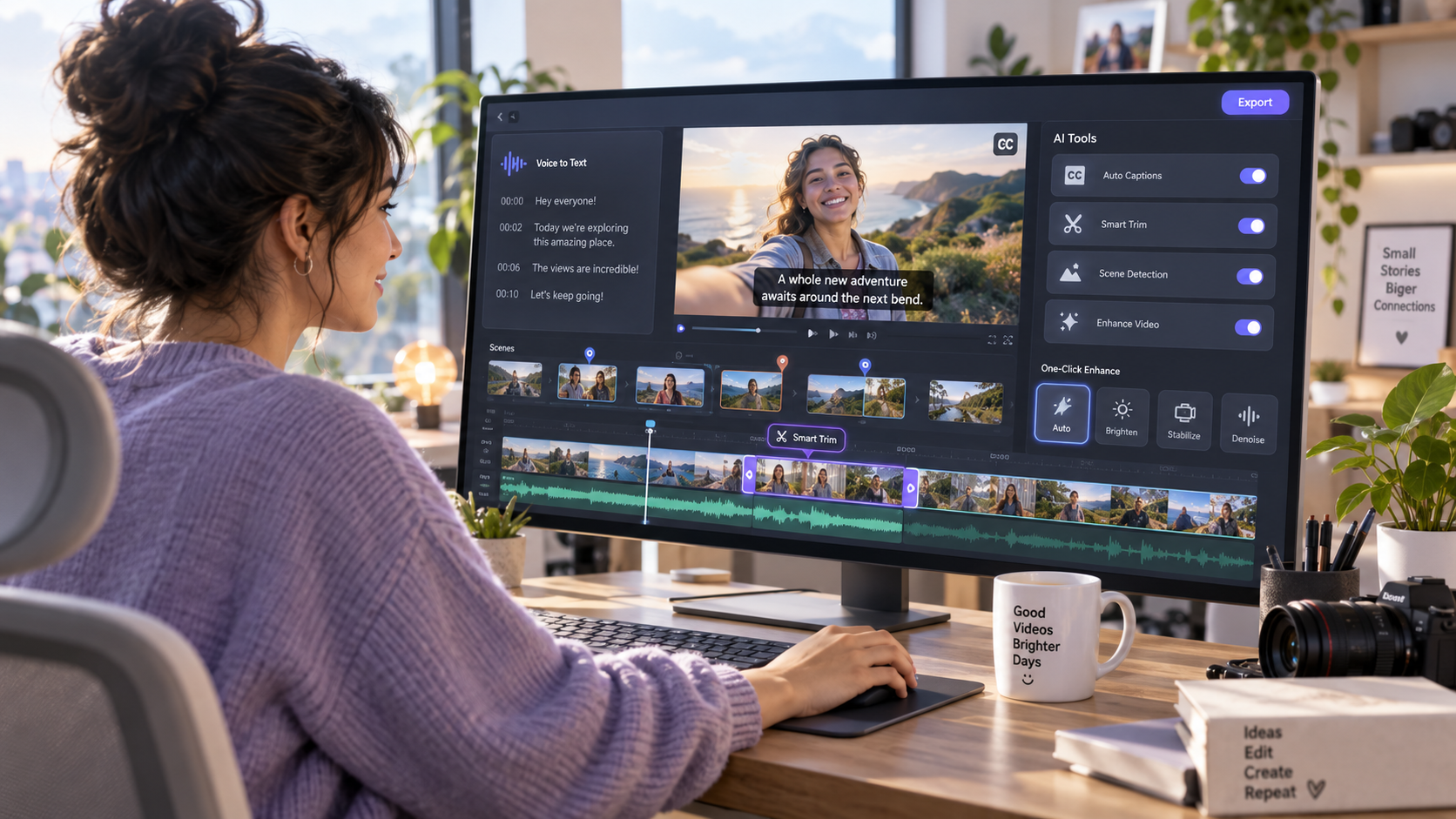
Editing videos used to require a mix of skills, a good eye for creativity, and loads of patience. A brief video clip could be tedious; you'd go through several rounds for sorting, cutting scenes, putting on subtitles, regulating the sound, and maybe even making variations for different social media platforms.
With the introduction of more AI in the creative tech world, a great number of tedious video tasks can now be managed quite smoothly.
AI-powered video software is not meant to take over jobs from professional editors, really. They can, however, assist creators in freeing up time on repetitive tasks like organizing footage, trimming and scene cutting so that they spend their creative energy on things like storytelling, setting the right tempo, and the look and feel of the visual elements themselves.
Making the Editing Process Simpler
For new creator it can be really tough to understand what the first step should be. The standard way of editing can be overwhelming for the uninitiated person who has no clue about tracks, transitions, effects, and export settings.
By offering a way to sort out thoughts and translating straightforward comments into tangible editing advice, AI enables an artist to become familiar with the whole process. For instance, an artist could think of a rough scene and through the help of an AI tool, come up with a basic blueprint and only after that, make more intricate editing decisions.
For people exploring a ChatGPT video editor, conversational instructions can provide another way to approach video creation.Rather than checking every option one by one, the users can tell what they need to do and then, based on the suggested options, choose what to start with.
From an Idea to a Video Plan
Editing starts with a good idea. The video creator needs to understand the message they wish to deliver, their intended audience, the details they need to emphasize in their message, and how long it all should be.
AI can be of great help while making up the outline for the video, suggesting possible scenes, hooks to attract the viewer, and brief captions for the various parts. It is extremely useful for making educational, tutorials, product demonstration, and social media videos.
Suppose a video tutor is creating a three-minute tutorial. After determining the main topics, the tutor would decide which visuals should be included to highlight each segment. With a plan in hand, the editing will go smoother.
Automating Repetitive Tasks
Video editing requires performing various little things that don't really demand a great extent of creativeness. Doing captions editing, video text formatting, clip sorting, eliminating the quiet parts of the audio, and resizing the video for different channels by hand could waste quite some amount of time.
The use of AI is quite a big aid in this repetitive work.We can do routine adjustments and spend hours of time on that as opposed to the current situation where the software would do that work, and the creators just need to check the results and fix any mistakes there. This saves a lot of time, and therefore creative work becomes more valuable.
This work style is particularly beneficial if one piece is going to be broken into many different ones through content repurposing. For instance, a video could be adapted as a video for a social network, a vertical video, or even several microlearning videos. AI can be used for making these transformations at one of the early stages but the human creator is still the one who makes the final decisions.
Why Human Creativity Still Matters
Automated tools do speed up the editing process significantly though one should keep in mind that fast is not necessarily good. In addition to speed, the human touch is still essential for determining what aspects to highlight, where a scene should be cut, or, for example, how a certain moment should be portrayed to the audience.
AI is capable of detecting patterns, recognizing them and also executing the commands. Nevertheless, without understanding what a given content is for, a visual piece can be misleading to the audience as the purpose behind it is not clear enough to the machine. For example, a funny, a sad or a subtle message that supports the product can be completely lost in the editing process as the machine is only looking for the technical perfection.Because of that creators should regard AI suggestions as a great source of help and not final words.
Reviewing AI-Generated Results
Proofreading by a human prior to going live is a very crucial step. Caption should be looked into spell and factual errors while automatic trimmings must be assessed to the extent possible that key context is still retained.
Musical track levels, transitions, visual unity, and flow have also to be the areas of concern by the creators. A technically good video may still make viewers uncomfortable if scenes are being flipped very often (too fast) or audio is being mismatched in level (imbalance).
Here is the easiest approach to review: first, you watch the complete video from start to end, you refrain yourself from making any changes or cuts at all, and then, you jot down the places that have you been puzzled / slowed down / irritated / unnecessary. This way the author can perceive and review the result as if s/he were a spectator.
Using AI Without Losing Originality
Another benefit of utilizing AI in a thoughtful manner is unleashing one's creative potential. If tedious jobs become a breeze, creators get the chance to dedicate themselves fully to experimenting with all sorts of novel ways of expression.
Still, content that is heavily reliant on the software might start to seem like other content, thus making an impression of lack of originality. What makes the story original is still the creator's decision on choice of words, images, rhythm, and topic.
The most effective working process is a combination one in which AI provides help with the pre-work, organizing tasks, and repeated editing work, while the creator of the film dictates the message and the creative direction themselves.
The Future of Everyday Video Creation
AI is slowly becoming a feature of everyday video-production workflows, not limited to professional studios. As these tools progressively evolve, it might become even easier for novices to get on experimenting with video through the use of AI tools without first gaining mastery over the various detailed aspects of traditional editing software.
For seasoned editors, the gain could be different. Rather than replacing the skills they have honed over time, AI technology could free up the amount of work one does on the more mechanical aspects of editing. They would also get new perspectives on the material which could be used for idea experimentation.
In this collaborative mode where AI and humans work together, technology would handle some mundane tasks while humans were the ones who decided on the story, maintained the quality of the video, and made the key creative decisions.
Conclusion
AI video tools are helping with the video editing process by assisting in content planning, doing tasks that require a lot of time automatically, such as the ones humans usually handle, and preparing videos for different formats. Although these features can greatly reduce the amount of time a project takes, their effectiveness can be increased when a human double checking is in there.
A creator can see AI as a tool for work but not a replacement for human creativity. By striking the right balance of using automated processes and human intuition, even difficult editing tasks and workflows can become easier while at the same time maintaining the authenticity and intention behind the original content of the final video.

Anderson Patterson
Author
Anderson Patterson, a tech enthusiast with a degree in Computer Science from Stanford University, has over 5 years of experience in this industry.
Anderson's articles are known for their informative style, providing insights into the latest tech trends, scientific discoveries, and entertainment news.
Anderson Patterson's hobbies include exploring Crypto, photography, hiking, and reading.
Anderson Patterson's hobbies include exploring Crypto, photography, hiking, and reading.
In the Crypto niche, Anderson actively researches and analyzes cryptocurrency trends, writes informative articles about blockchain technology, and engages with different communities to stay updated on the latest developments and opportunities.

Darren Mcpherson
Reviewer
Darren Mcpherson brings over 9 years of experience in politics, business, investing, and banking to his writing. He holds degrees in Economics from Harvard University and Political Science from Stanford University, with certifications in Financial Management.
Renowned for his insightful analyses and strategic awareness, Darren has contributed to reputable publications and served in advisory roles for influential entities.
Outside the boardroom, Darren enjoys playing chess, collecting rare books, attending technology conferences, and mentoring young professionals.
His dedication to excellence and understanding of global finance and governance make him a trusted and authoritative voice in his field.
Latest Articles
Popular Articles