How To Choose Flooring For A Busy Household Without Regretting It Later
Choosing new flooring is easy when you are standing in a quiet showroom, admiring perfect samples under flattering lights.
Author:Karan EmeryReviewer:Frazer PughAug 11, 20260 Shares6 Views
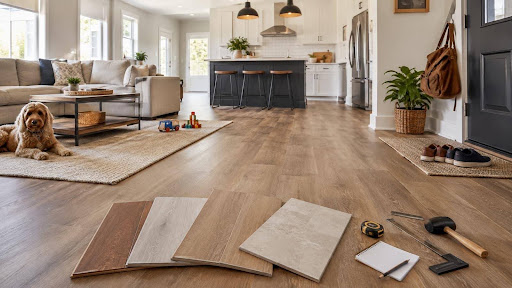
Choosing new flooring is easy when you are standing in a quiet showroom, admiring perfect samples under flattering lights. The harder part is imagining what those same floors will look like after a few years of muddy shoes, spilled drinks, pet claws, dropped toys, moving furniture, and everyday cleaning.
For a busy household, flooring has to do more than look good on installation day. It needs to support the way the home is actually used. That means considering traffic, moisture, maintenance, comfort, repairability, and installation quality before falling in love with a color or wood grain.
Homeowners who are unsure where to begin often benefit from speaking with an experienced flooring company in Largo, FL, or a qualified installer in their own area. A professional can assess the subfloor, identify moisture risks, explain how different materials perform, and help prevent expensive surprises after the flooring has already been purchased.
The goal is not to find an indestructible floor. Such a thing does not exist, despite what some product brochures seem to suggest. The goal is to choose a floor whose strengths and limitations match your household.
Start With Your Household, Not The Sample Rack
Before comparing materials, take an honest look at what happens inside your home on an average week.
Do children race through the hallway in socks? Does a large dog launch itself toward the front door whenever someone rings the bell? Is the kitchen constantly in use? Do family members enter through a garage carrying sand, rainwater, or grass clippings? Are there elderly relatives who would benefit from a warmer, less slippery surface?
These practical details matter more than current design trends.
A household with two adults who remove their shoes at the door may be able to maintain almost any flooring material. A family with three children, two pets, and a backyard pool has a very different set of requirements.
It helps to evaluate each room according to five factors:
- Amount of foot traffic
- Exposure to water or humidity
- Risk of scratches and dents
- Cleaning frequency
- Desired comfort underfoot
The busiest parts of the home usually include entryways, kitchens, hallways, family rooms, and laundry areas. These spaces need flooring that can handle repeated wear without requiring constant attention.
Bedrooms and formal rooms may allow more flexibility because they generally experience less moisture and impact. In other words, there is no rule saying every room must use the same material. Visual continuity is attractive, but practicality should still win when conditions differ significantly.
Understand The Trade-Offs Between Popular Flooring Materials
Every flooring material solves some problems while creating others. The smartest choice is usually the one with disadvantages you can realistically live with.
Hardwood
Hardwood remains popular because it brings natural warmth, character, and long-term value to a home. Each board has its own grain pattern, and a well-maintained hardwood floor can age beautifully rather than simply looking worn.
It can also be refinished, which gives it an advantage over many synthetic products. Scratches, dull finishes, and surface wear may eventually be sanded away instead of requiring full replacement.
However, hardwood is not carefree. Standing water, repeated moisture exposure, pet accidents, and humidity fluctuations can cause staining, cupping, gaps, or movement. It may also dent under heavy furniture or sharp impacts.
For households that value natural materials and are willing to manage spills promptly, professional hardwood floor installationcan be an excellent long-term investment. Installation quality is especially important because moisture conditions, expansion space, subfloor flatness, and acclimation all influence how the floor performs.
Hardwood often works best in living rooms, dining rooms, bedrooms, offices, and other relatively dry spaces. It can be used in kitchens, but only when the household understands the maintenance involved.
Luxury Vinyl Plank
Luxury vinyl plank, commonly called LVP, has become a go-to option for busy homes because it combines a wood-like appearance with strong moisture resistance and relatively simple maintenance.
It is often used throughout kitchens, living areas, hallways, and bedrooms, creating a continuous look without the same concern about occasional spills that comes with natural wood.
Good-quality LVP can resist stains, daily wear, and pet-related messes. It is usually cleaned with routine sweeping or vacuuming and occasional damp mopping. That makes it appealing to anyone who would rather spend Saturday enjoying the house than carefully polishing it.
Still, LVP is not all the same. Product thickness, wear-layer quality, locking-system strength, core construction, and manufacturer requirements vary widely. Thin or poorly installed planks may separate, flex, reveal subfloor imperfections, or become damaged at the joints.
Proper LVP flooring installationshould include careful subfloor inspection and preparation. Even rigid-core flooring needs a sufficiently flat surface. Installing premium planks over an uneven slab is rather like placing a new dining table on three stable legs and one paperback book. It may look acceptable briefly, but the underlying problem has not disappeared.
Tile
Tile is one of the strongest options for areas exposed to moisture, sand, and heavy use. Porcelain tile, in particular, can perform well in entryways, kitchens, bathrooms, laundry rooms, and homes in warm climates.
It does not scratch easily, absorbs little water when properly selected, and can handle frequent cleaning. Tile also offers an enormous range of visual styles, including stone, concrete, and wood-inspired designs.
Its main drawback is comfort. Tile is hard and may feel cold underfoot. Dropped glasses tend to lose arguments with it. Grout lines also require maintenance and can collect dirt if the grout is poorly sealed or unusually light in color.
Installation is another major consideration. Tile needs a stable, properly prepared substrate. Cracks, movement, or uneven areas beneath the surface can lead to cracked grout or tile later.
Laminate
Modern laminate can provide a convincing wood appearance at a moderate price. It is often more scratch-resistant than hardwood and may perform well in living rooms, bedrooms, and hallways.
However, water resistance varies by product. Some newer laminates offer improved protection against spills, but that does not always make them suitable for prolonged moisture exposure. Water entering the joints may still cause swelling that cannot be repaired.
Laminate is worth considering when scratch resistance and affordability are priorities, but product specifications should be read carefully. “Water-resistant” and “waterproof” are not interchangeable terms.
Do Not Ignore The Subfloor
Homeowners often spend weeks choosing a flooring color and only a few minutes thinking about the surface underneath it. Installers, meanwhile, know that the subfloor may determine whether the project succeeds.
A subfloor or concrete slab may have low spots, high spots, cracks, moisture issues, loose panels, squeaks, adhesive residue, or damage from previous flooring. New material does not automatically hide these conditions.
In fact, many modern flooring products make subfloor problems more noticeable. Floating planks can move or click over low areas. Tile can crack over unstable sections. Hardwood may squeak or shift if the base is loose. Glue-down flooring can reveal every ridge and depression beneath it.
Before installation, the floor may need:
- Old adhesive removal
- Moisture testing
- Crack repair
- Floor patching or leveling
- Loose-panel fastening
- Cleaning and debris removal
- Underlayment or moisture-control materials
This work is not particularly glamorous, and no one posts dramatic before-and-after photos of a properly cleaned concrete slab. Yet preparation is often the difference between a floor that feels solid and one that develops problems within a year.
Choose Colors And Textures That Forgive Real Life
Busy homes are not showrooms. Dust appears. Crumbs migrate. Pet hair seems capable of reproducing overnight. Flooring color and texture can either disguise this reality or highlight it.
Very dark floors tend to show light-colored dust, lint, and pet hair. Very light floors may reveal dark debris, stains, and tracked-in dirt. Mid-tone colors are often the most forgiving.
Heavy gloss can make scratches and footprints more visible, while matte or low-sheen finishes usually hide minor wear better. Flooring with subtle grain variation also tends to disguise dust and small marks more effectively than a perfectly uniform surface.
This does not mean choosing a dull floor. It means looking at samples under realistic conditions.
Take sample boards home and view them:
- In daylight and artificial light
- Next to cabinets, walls, and furniture
- From different directions
- With a small amount of dust or pet hair nearby
- In both open and shaded areas of the room
A sample that looks warm and natural in a store may appear gray, yellow, or unexpectedly dark in your home. Lighting changes everything.
Plank size also affects the room. Wider planks can make a space feel calmer and more open, while narrow planks create more visual movement. Strong color variation may add character, but too much can make a large open-plan area feel busy.
Think Beyond The Purchase Price
The least expensive flooring is not always the most economical flooring.
A low-cost product may require replacement sooner, especially if it is poorly suited to the room. On the other hand, the most expensive option is not automatically the best choice for a household that needs easy maintenance and high moisture resistance.
Consider the complete cost of ownership, including:
- Removal of existing flooring
- Disposal
- Subfloor preparation
- Underlayment or moisture barriers
- Installation labor
- Trim and transitions
- Furniture moving
- Future maintenance
- Potential repairs or refinishing
It is also wise to purchase extra material. Spare planks or tiles can be useful if part of the floor becomes damaged years later, when the original product may no longer be available.
Ask how individual sections can be repaired. Hardwood can often be refinished or replaced board by board. Glue-down vinyl may allow localized replacement, though matching can be difficult. Floating floors sometimes require disassembly from the nearest wall to reach a damaged plank. Tile replacement depends on having matching spare pieces and avoiding damage to surrounding tiles.
A floor that is technically durable but nearly impossible to repair may not be the most practical option.
Conclusion
The best flooring for a busy household is not simply the material with the highest durability rating or the most attractive showroom sample. It is the floor that fits the home’s traffic patterns, moisture exposure, cleaning habits, comfort needs, and budget.
Hardwood offers warmth, character, and refinishing potential. LVP provides moisture resistance and easy upkeep. Tile handles water and heavy use exceptionally well. Laminate can offer good scratch resistance and visual appeal at a more accessible price.
Whichever material you choose, do not underestimate preparation and installation. A good product installed over a poorly prepared surface can still fail. A thoughtfully selected material installed correctly is far more likely to remain attractive, comfortable, and functional for years.
In a busy home, floors will be walked on, spilled on, scratched, cleaned, and occasionally used as a racetrack by children or pets. That is not a flaw in the flooring plan. That is the whole point of having a home people actually live in.

Karan Emery
Author
Karan Emery, an accomplished researcher and leader in health sciences, biotechnology, and pharmaceuticals, brings over two decades of experience to the table. Holding a Ph.D. in Pharmaceutical Sciences from Stanford University, Karan's credentials underscore her authority in the field.
With a track record of groundbreaking research and numerous peer-reviewed publications in prestigious journals, Karan's expertise is widely recognized in the scientific community.
Her writing style is characterized by its clarity and meticulous attention to detail, making complex scientific concepts accessible to a broad audience. Apart from her professional endeavors, Karan enjoys cooking, learning about different cultures and languages, watching documentaries, and visiting historical landmarks.
Committed to advancing knowledge and improving health outcomes, Karan Emery continues to make significant contributions to the fields of health, biotechnology, and pharmaceuticals.

Frazer Pugh
Reviewer
Frazer Pugh is a distinguished expert in finance and business, boasting over 6 years of experience. Holding an MBA in Finance from Stanford University, Frazer's credentials underscore his authority and expertise in the field.
With a successful track record in executive roles and as a published author of influential articles on financial strategy, his insights are both deep and practical.
Beyond his professional life, Frazer is an avid traveler and culinary enthusiast, drawing inspiration from diverse cultures and cuisines.
His commitment in delivering trustworthy analysis and actionable advice reflects his dedication to shaping the world of finance and business, making a significant impact through his work.
Latest Articles
Popular Articles