Inside LIS Technologies’ Push To Close America’s 14-Month Uranium Supply Gap
The United States is in the midst of building a domestic nuclear supply chain, and bolstering the current uranium supply is of prime importance.
Author:Gordon DickersonReviewer:Darren McphersonJan 28, 20264.1K Shares93.2K Views
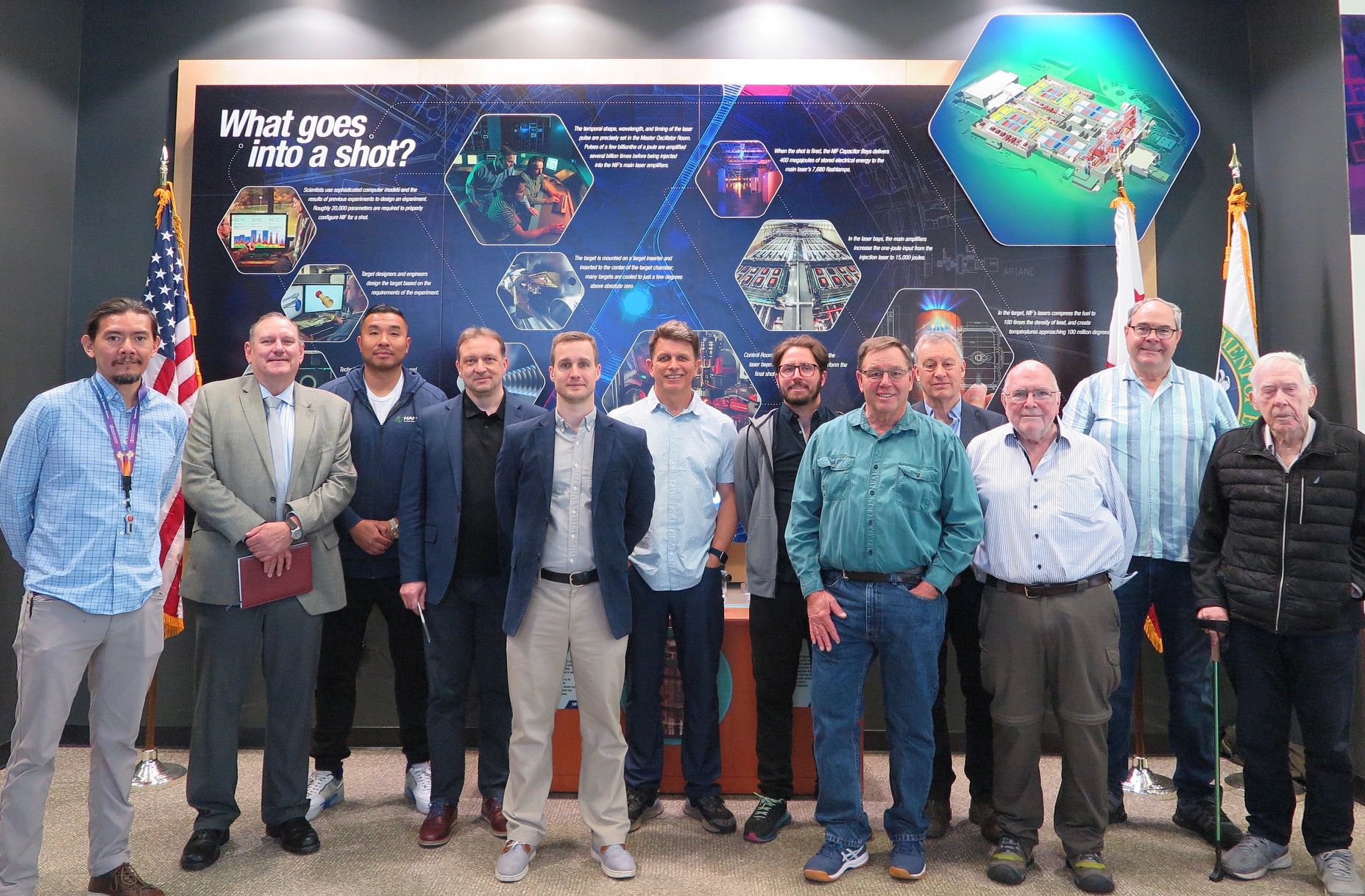
In a time marked by shifting geopolitical tensions, energy security has become increasingly important. The United States is in the midst of building a domestic nuclear supply chain, and bolstering the current uranium supply is of prime importance. LIS Technologiesmight be just the company for the job.
Like many other countries, the U.S. is embracing nuclear energy as an efficient, environmentally friendly way to meet rising power demands. It’s also facing a bumpy transition to domestic fuel production.
“The U.S. was the world's biggest exporter of nuclear fuel and nuclear services,” says Christo Liebenberg, President and Co-Founder of LIS Technologies. “Today, we are the world's biggest importer of all of that.”
Liebenberg explains that in the early 1990s, CRISLA (Condensation Repression Isotope Selective Laser Activation), the same technology on which LIS Technologies’ current process is based, had been successfully demonstrated. So what happened?
“The Soviet Union came down, and the world markets opened up to Russia,” he says. “They sold enriched uranium for less than half the price compared to what it was to stimulate their economy. The U.S. decided to just buy it on the international market. So that's why CRISLA, as well as other technologies, were stopped in 1993.”
Fast forward 30 years and in 2024, the Biden administration passed the Prohibiting Russian Uranium Imports Act to phase out the country’s reliance on imported uranium from Russia. The goal is to eventually have a stable, reliable domestic fuel pipeline.
It’s generally accepted that building this pipeline will take time. However, the country’s diminishing uranium inventory is causing concern.
Currently, the U.S. has about 14 months of uranium inventoryon hand. That might sound reasonable until you compare the reserves of other major countries. E.U. nations have an average uranium inventory of 2.5 years. China’s stockpile is even more impressive: It has close to 12 years of uranium inventory on hand.
Achieving domestic energy stability is important, and it begins with replenishing the country’s uranium reserves.
In 2024, the Department of Energy announced its Low-Enriched Uranium (LEU) Acquisition Program. The initiative awarded contracts to LIS Technologiesand a handful of other companies, and the DOE will invest up to $3.4 billion.
Making enriched uranium can be costly in terms of resources and time. However, given the shrinking uranium reserves, the U.S. is in a bit of a time crunch. Although it will take time to build the infrastructure needed to scale the process, LIS Technologies has shown that it can turn natural uranium into fuel for nuclear reactors in just one or two steps.
Reactors and nuclear power plants generally run on one of two kinds of fuel. Low-enriched uranium (LEU) has up to 5% of the key uranium isotope U-235. High-assay low-enriched uranium (HALEU) has between 5% and 20% U-235. (For the sake of comparison, uranium in its natural state is about 0.7% U-235).
Although LIS Technologies uses the CRISLA technology innovated decades ago, Liebenberg and co-founder Jeff Eerkens have developed and improved upon it. They are confident that soon they will demonstrate single-stage laser enrichment with a novel new architecture.
“It means you irradiate the uranium once, and it's enriched from natural all the way to the LEU level,” says Liebenberg. “If you irradiate it again in a second stage, you take that LEU and go all the way to HALEU, or 20% enrichment level.”
Liebenberg notes that LIST is on track to build an enrichment facility, and with the government supporting the shortening of the licensing and regulatory process, his team is confident that they will build the next gen enrichment facility in a record amount of time.
With everything in place LIS Technologiesis ready to help the U.S. replenish its uranium supply and move toward a new era of energy security.

Gordon Dickerson
Author
Gordon Dickerson, a visionary in Crypto, NFT, and Web3, brings over 10 years of expertise in blockchain technology.
With a Bachelor's in Computer Science from MIT and a Master's from Stanford, Gordon's strategic leadership has been instrumental in shaping global blockchain adoption. His commitment to inclusivity fosters a diverse ecosystem.
In his spare time, Gordon enjoys gourmet cooking, cycling, stargazing as an amateur astronomer, and exploring non-fiction literature.
His blend of expertise, credibility, and genuine passion for innovation makes him a trusted authority in decentralized technologies, driving impactful change with a personal touch.

Darren Mcpherson
Reviewer
Darren Mcpherson brings over 9 years of experience in politics, business, investing, and banking to his writing. He holds degrees in Economics from Harvard University and Political Science from Stanford University, with certifications in Financial Management.
Renowned for his insightful analyses and strategic awareness, Darren has contributed to reputable publications and served in advisory roles for influential entities.
Outside the boardroom, Darren enjoys playing chess, collecting rare books, attending technology conferences, and mentoring young professionals.
His dedication to excellence and understanding of global finance and governance make him a trusted and authoritative voice in his field.
Latest Articles
Popular Articles