Marathon Training For Beginners - Essential Tips And Techniques
Discover essential marathon training for beginners tips embarking on their marathon training journey. Get started with confidence today!
Author:Daniel JamesReviewer:Karan EmeryFeb 24, 20242.6K Shares331.1K Views

Embarking on a marathon training journey as a beginner can be both exciting and daunting. Whether you're aiming to complete your first marathon or simply looking to challenge yourself and improve your fitness, proper marathon training for beginnersis essential for success. Let's start you training guide.
In this guide, we'll provide a comprehensive overview of marathon training for beginners, covering key principles, training techniques, and tips to help you reach your goals.
Setting Realistic Goals
Before diving into marathon training, it's important to set realistic goals based on your current fitness level, experience, and personal aspirations. Whether your goal is to finish the race, achieve a specific time, or simply enjoy the experience, having clear objectives will guide your training and keep you motivated throughout the process.
Understanding The Basics Of Marathon Training
Marathon training typically involves gradually increasing your mileage and building endurance over several months leading up to the race. A structured training plan will include a mix of running workouts, cross-training, rest days, and recovery activities to help you develop the physical and mental stamina required to complete the marathon distance.
Key Components Of Marathon Training For Beginners
- Building Base Mileage -Begin by establishing a solid base of running mileage to improve aerobic fitness and endurance. Start with shorter runs and gradually increase your weekly mileage over time.
- Long Runs - Long runs are a cornerstone of marathon training, helping to build endurance and mental toughness. Gradually increase the distance of your long runs each week, with a goal of completing several runs at or near the marathon distance in the weeks leading up to the race.
- Speed Work -Incorporating speed work, such as intervals, tempo runs, and hill repeats, into your training can help improve running economy, speed, and lactate threshold. These workouts should be included once or twice a week to complement your long runs.
- Cross-Training - In addition to running, cross-training activities such as cycling, swimming, or strength training can help improve overall fitness, prevent injury, and provide a break from the repetitive nature of running.
- Rest and Recovery - Adequate rest and recovery are essential for allowing your body to adapt to the demands of training and reduce the risk of overuse injuries. Incorporate rest days into your training schedule and prioritize sleep, nutrition, hydration, and self-care practices.
What Is The Duration Of A Marathon Training Program?
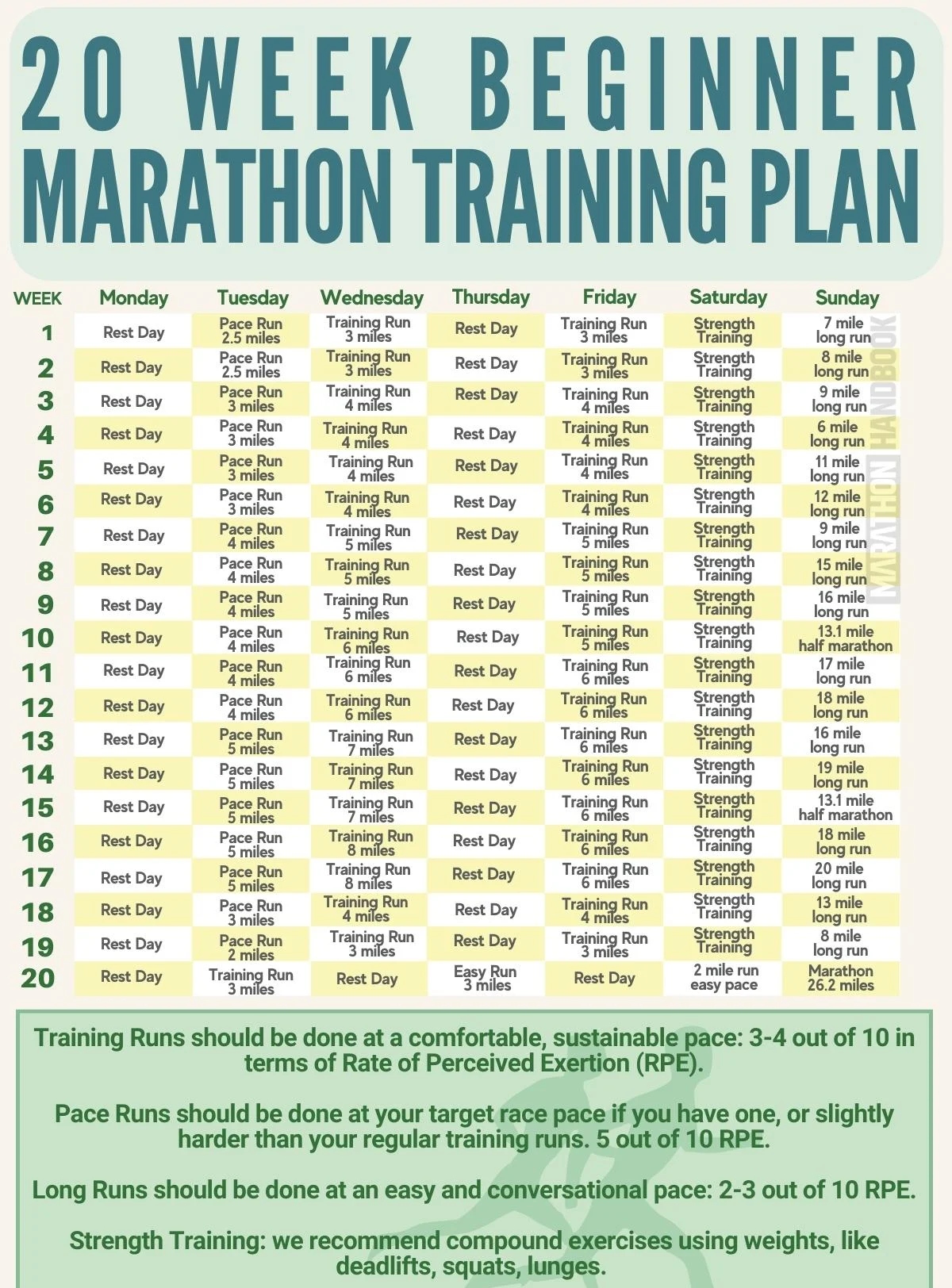
Marathon training regimens typically last 12/16 weeks, but they can occasionally last 20. Depending on your objectives, you will likely run three to five times a week throughout this period. As the race day approaches, your mileage will rise, but not by an excessive amount.
You can cross-train and engage in low-intensity exercise (like as yoga or Pilates) on your days off from running, but it's crucial to remember to schedule appropriate rest days as well, in order to give your body enough time to heal completely.
Which Training Schedules Are Ideal For Beginners, Or What Time Should I Strive For To Finish A Marathon?
It's preferable to start with a training plan that focuses on finishing the distance rather than finishing in under a specific amount of time if you're a total newbie. You can use our race time estimator if you are more seasoned, have participated in a few events, or are accustomed to running longer distances. You may figure out what kind of time is reasonable for you and, consequently, which plan best suits your objectives by using a recent finishing time from a different race.
What Pace Should I Be Running At?
The effort that goes into each run is significantly more important to consider than the actual pace. Spend less time and effort worrying about your exact pace or comparing yourself to other individuals. Each of our training regimens calls for a different run, so you'll need to exercise at a different pace. A run that is designated as "easy" ought to feel exactly that.
It's okay if something happens a little faster sometimes than others. Use our training pace calculator for quicker runs, also known as "tempo" or interval sessions, but keep in mind that these are recommended paces rather than strict guidelines. They are unable to account for everything else that could influence your mood, such as your sleep patterns, eating habits, and other stressors in your life.
Getting Started With The Training Schedule
What to anticipate from your marathon training each week is as follows:
- Mondays -Mondays are typically days off. Don't overlook rest days; they are essential to your recuperation and efforts to avoid injuries.
- Tuesdays and Thursdays - Complete the prescribed mileage after your warm-up at a moderate pace that is somewhat quicker than your long run pace. After your run, stretch and cool off.
- Wednesdays and Fridays - On Wednesdays and Fridays, spend 30 to 45 minutes performing a cross-training (CT) exercise at an easy to moderate intensity level, such as swimming, elliptical training, or biking. Strengthening your entire body at least once a week is also useful. On Friday, if you're feeling particularly tired or sore, take the day off. It's critical that you're in peak physical condition for your long run on Saturday.
- Saturdays - Go for a lengthy, leisurely run on this day. Follow the prescribed distance at a leisurely, conversational pace. Breathe naturally as a guide. During your lengthy runs, you should be able to speak in full words and breathe easily.
- Sundays -Sundays are a busy day for recuperation. To assist loosen up your muscles, your short run should be at a very easy (EZ), comfortable speed.
To fit in with your schedule, you can change the days. Just be careful not to go out for too long or too intensely two days in a row, and always use supportive sports bras when jogging to reduce breast soreness.
Tips For Success
- Listen to Your Body -Pay attention to signs of fatigue, pain, or injury, and adjust your training as needed to prevent overtraining and injury.
- Stay Consistent -Consistency is key in marathon training. Stick to your training plan, even on days when motivation is low, and trust the process.
- Fuel Properly -Proper nutrition and hydration are critical for supporting training adaptations and fueling your runs. Eat a balanced diet rich in carbohydrates, protein, healthy fats, fruits, and vegetables, and stay hydrated throughout the day.
- Seek Support - Joining a running group, hiring a coach, or finding a training buddy can provide accountability, motivation, and support throughout your marathon training journey.

Marathon Training For Beginners - FAQs
How Should Beginners Start Training For A Marathon?
Beginners should start by gradually building their mileage, incorporating long runs, speed work, cross-training, and rest days into their training schedule.
How Many Miles Should Beginners Run When Training For A Marathon?
Beginners should aim to gradually increase their weekly mileage, starting with around 15-20 miles per week and building up to peak mileage of 30-40 miles per week before the race.
What Should Beginners Eat Before A Long Run?
Before a long run, beginners should focus on consuming easily digestible carbohydrates, such as oatmeal, bananas, or toast with peanut butter, to provide fuel for sustained energy.
How Often Should Beginners Rest During Marathon Training?
Beginners should incorporate rest days into their training schedule, typically one or two days per week, to allow for recovery and prevent overuse injuries.
How Long Should A Beginner Train For A Marathon?
The majority of marathon training schedules last 12 to 20 weeks. Before the race, beginning marathoners should try to increase their weekly distance to 50 miles in the four months before the event. It is adequate to run three to five times a week. Most of these runs should be completed at a leisurely pace.
How Do I Start Training For A Marathon With No Experience?
In the four months preceding the marathon, novice runners should strive to increase their weekly mileage to 80 kilometers. 3–5 runs each week is a fair amount. You should go at a comfortable speed for the most majority of these runs. You should be able to have a conversation while running at a moderate pace.
How Do I Start My First Marathon?
- Give your training a 20-week period.
- Become accustomed to running at least eighteen miles.
- Locate a network of supporters.
- Give yourself two days off from running each week.
- Some lengthy runs should be done at marathon speed.
- It's not important to worry about finishing a 20-mile run.
- As early as 20 minutes into the race, begin refueling.
Conclusion
Embarking on a marathon training journey as a beginner is a challenging yet rewarding endeavor. By setting realistic goals, understanding the basics of marathon training, incorporating key training components of marathon training for beginners, and following tips for success, you can confidently progress toward completing your first marathon and achieving your running goals. Remember to stay patient, stay focused, and enjoy the journey every step of the way.
Jump to
Setting Realistic Goals
Understanding The Basics Of Marathon Training
Key Components Of Marathon Training For Beginners
What Is The Duration Of A Marathon Training Program?
Which Training Schedules Are Ideal For Beginners, Or What Time Should I Strive For To Finish A Marathon?
What Pace Should I Be Running At?
Getting Started With The Training Schedule
Tips For Success
Marathon Training For Beginners - FAQs
Conclusion

Daniel James
Author
Daniel James is a distinguished gerontologist, author, and professional coach known for his expertise in health and aging.
With degrees from Georgia Tech and UCLA, including a diploma in gerontology from the University of Boston, Daniel brings over 15 years of experience to his work.
His credentials also include a Professional Coaching Certification, enhancing his credibility in personal development and well-being.
In his free time, Daniel is an avid runner and tennis player, passionate about fitness, wellness, and staying active.
His commitment to improving lives through health education and coaching reflects his passion and dedication in both professional and personal endeavors.

Karan Emery
Reviewer
Karan Emery, an accomplished researcher and leader in health sciences, biotechnology, and pharmaceuticals, brings over two decades of experience to the table. Holding a Ph.D. in Pharmaceutical Sciences from Stanford University, Karan's credentials underscore her authority in the field.
With a track record of groundbreaking research and numerous peer-reviewed publications in prestigious journals, Karan's expertise is widely recognized in the scientific community.
Her writing style is characterized by its clarity and meticulous attention to detail, making complex scientific concepts accessible to a broad audience. Apart from her professional endeavors, Karan enjoys cooking, learning about different cultures and languages, watching documentaries, and visiting historical landmarks.
Committed to advancing knowledge and improving health outcomes, Karan Emery continues to make significant contributions to the fields of health, biotechnology, and pharmaceuticals.
Latest Articles
Popular Articles