How Has Power In Modern Lobbying Shifted, And Why Does This Make Understanding State Politics Key For Federal Success?
Lobbying has long been an effective strategy for businesses and organizations to exert political influence. It allows them access to policymakers and helps them drive positive change in the industries they work in.
Author:Dexter CookeReviewer:Hajra ShannonMar 27, 20262 Shares2.1K Views
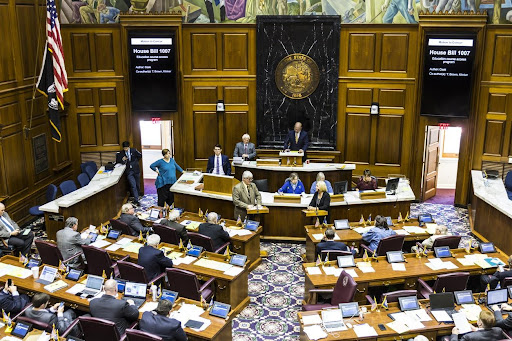
Lobbying has long been an effective strategy for businesses and organizations to exert political influence. It allows them access to policymakers and helps them drive positive change in the industries they work in.
The traditional approach to lobbying was based around a small circle of powerhouse Washington, DC-based companies that clients would hire. However, modern times have seen this old way of doing things disrupted, and this is especially true since President Donald Trump’s second term in office.
Federal Focus To Agile, State-rooted Methods
Lobbying remains as important as ever for organizations looking to drive positive political change. While this hasn’t altered, the way that modern lobbying works has begun to look somewhat different.
Federal influence in the White House might still be the ultimate aim, but efforts to exert this are no longer confined to Washington, DC alone. Distributed power is now key to consider and sees what happens at state level having a major influence on a wider scale.
It’s no longer enough to assume that policy is made solely in the capital and flows down to states. Federal policy formation is now heavily influenced by what happens locally, and this makes agile, state-led lobbying ever more effective.
State-rooted Lobbying Firms Challenging The Status Quo
Real proof of this can be seen in how a new breed of lobbying firms have risen to the top of the sector. These companies might have offices in Washington, DC, but they are not based solely there. Many of them are founded in states outside of the capital and return impressive results for their clients.
Ballard Partners, run by Brian Ballard, is perhaps the lobbying powerhouse that sums this up best right now. The firm is based in Florida and earned revenue in excess of $30m during 2025. Its high-end list of clients (including Harvard and Amazon) shows that modern lobbying has moved away from traditional DC firms and toward companies driving change from individual states.
What Makes State-based Lobbying Firms So Popular?
One of the most interesting places to start is how these companies are embedded in state legislature and local politics.
This is not necessarily restricted to the state they’re based in either. Many will have established networks across the country, which helps them not only understand local issues but also access local politicians who can help. It also means that they can run multi-state lobbying campaigns that generate real impact.
State-based lobbying companies also have the distinct advantage of catching key policy trends early before they hit federal level. This enables them to take what is already happening at ground level and present it at federal level with real-world credibility.
Understanding State Politics Is Key For Federal Success
Although US politics might have seen a top-down approach to policymaking previously, state politics has a much bigger say currently. This makes understanding how the levers of power at state level drive federal success critical.
There’s no doubt that innovations around policies are worth looking at in this regard. We now see individual states acting as testing grounds for new policies and officials at state level more open to policy innovation.
Federal lawmakers will then wait to see how things pan out before deciding to adopt policies that have been proven to work by states.
This is a major shift for the lobbying sector because it means that firms involved in localized lobbying have more power than ever. One of the best examples of this in action is the legalization of cannabis in Californiaand how it influenced federal policymakers to rethink their approach to this subject.
Federal Struggles Lead To State-led Success
It’s also crucial to factor in how polarization at federal level has opened the door for states to exert more influence in the world of politics. The Senate at the moment, for example, struggles with political gridlock on major legislation, due to an absence of a 60-vote majority for either party.
This policy vacuum allows states to step in and pass their own laws on the same issues. This often prompts officials at the federal level to follow suit and pass laws that bring all states into line with what one is doing.
Modern lobbying no longer DC centric
While exerting influence at a federal level in Washington, DC remains important for lobbying firms and their clients, it is no longer the only focus. Modern lobbying efforts increasingly use a more localized, state-level approach, which builds momentum to exert influence at the top. Positive access to state officials allows lobbyists to shape what happens in DC and make states major arenas for political change.
Dexter Cooke
Author
Dexter Cooke is an economist, marketing strategist, and orthopedic surgeon with over 20 years of experience crafting compelling narratives that resonate worldwide.
He holds a Journalism degree from Columbia University, an Economics background from Yale University, and a medical degree with a postdoctoral fellowship in orthopedic medicine from the Medical University of South Carolina.
Dexter’s insights into media, economics, and marketing shine through his prolific contributions to respected publications and advisory roles for influential organizations.
As an orthopedic surgeon specializing in minimally invasive knee replacement surgery and laparoscopic procedures, Dexter prioritizes patient care above all.
Outside his professional pursuits, Dexter enjoys collecting vintage watches, studying ancient civilizations, learning about astronomy, and participating in charity runs.

Hajra Shannon
Reviewer
Hajra Shannona is a highly experienced journalist with over 9 years of expertise in news writing, investigative reporting, and political analysis.
She holds a Bachelor's degree in Journalism from Columbia University and has contributed to reputable publications focusing on global affairs, human rights, and environmental sustainability.
Hajra's authoritative voice and trustworthy reporting reflect her commitment to delivering insightful news content.
Beyond journalism, she enjoys exploring new cultures through travel and pursuing outdoor photography
Latest Articles
Popular Articles