Scientists Unveil Astronomical Evidence Of The Universe's Resounding Background Hum
Scientists unveil astronomical evidence of the universe's resounding background hum as noted in a groundbreaking announcement on Thursday. Several astronomers from around the world revealed the momentous discovery of the first compelling evidence for a long-theorized form of gravitational waves that reverberate as a continuous background hum throughout the expanse of the universe.
Author:Daniel JamesReviewer:Karan EmeryJun 30, 202345.9K Shares1M Views
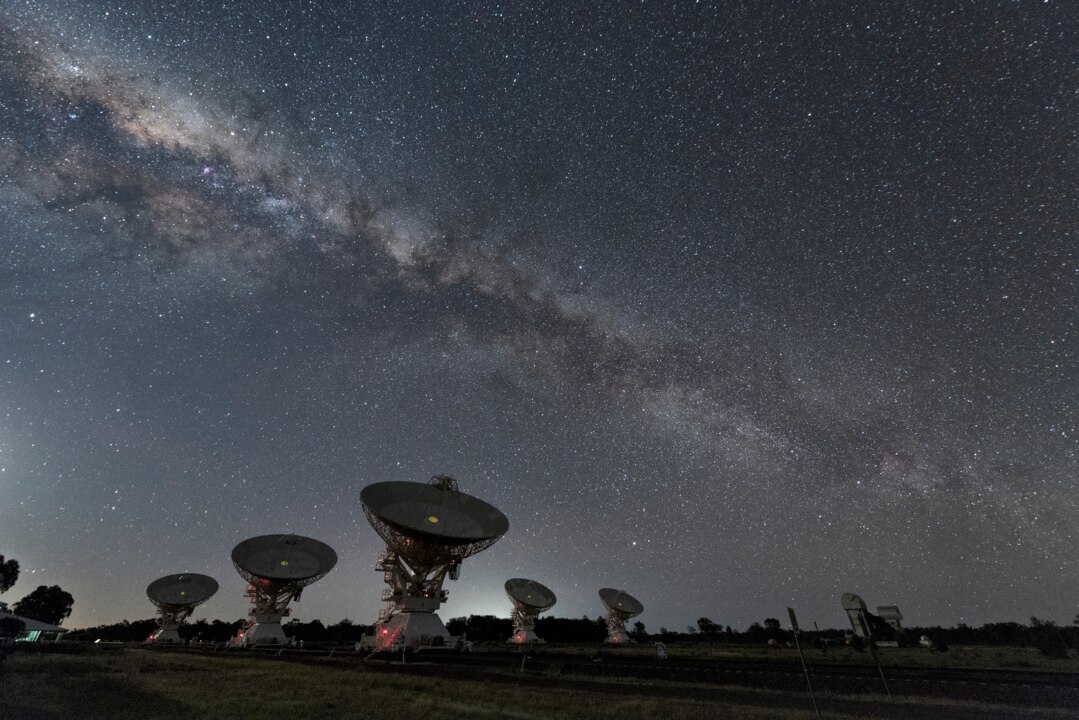
Scientists unveil astronomical evidence of the universe's resounding background hum as noted in a groundbreaking announcement on Thursday. Several astronomers from around the world revealed the momentous discovery of the first compelling evidence for a long-theorized form of gravitational waves that reverberate as a continuous background hum throughout the expanse of the universe.
This monumental breakthrough, achieved through the collaborative efforts of hundreds of scientists utilizing radio telescopes situated in North America, Europe, China, India, and Australia over the course of several years, has been hailed as a significant milestone that unveils an entirely new window into the mysteries of the cosmos.
Initially predicted by Albert Einstein over a century ago, gravitational waves are undulations that propagate through the very fabric of space, traversing all matter at the speed of light with minimal hindrance. Although their existence was not confirmed until 2015, when the first gravitational waves generated by the cataclysmic collision of two black holes were detected by observatories in the United States and Italy, the recent revelation pertains to a different type of gravitational waves.
Unlike the "high-frequency" waves resulting from singular violent events that send powerful, short bursts towards Earth, scientists have long been on the quest for "low-frequency" gravitational waves, theorized to permeate space akin to an ever-present background noise.
Under the collaborative efforts of the International Pulsar Timing Array consortium, scientists operating gravitational wave detectors across multiple continents have now unveiled robust evidence substantiating the existence of these elusive background waves, marking a significant milestone in our understanding of the universe's intricate workings.
“„We now know that the universe is awash with gravitational waves.- Michael Keith of the European Pulsar Timing Array
Using Dead Stars As Clocks
Astronomers have studied pulsars, which are remnants of stars that have gone supernova, to detect the subtle effects of gravitational waves as they traverse through space. Gravitational waves cause a gentle compression and expansion of objects in their path.
Pulsars are incredibly dense and rapidly spinning celestial objects that emit regular beams of radio waves, akin to cosmic lighthouses. By observing these pulsars, astronomers have sought to identify indications of the minute squeezing and stretching caused by low-frequency gravitational waves.
Keith described pulsars as an extraordinarily precise clock for the purposes of the research. To investigate gravitational waves, a network of radio telescopes worldwide was directed toward 115 pulsars within the Milky Way.
By meticulously measuring the minuscule variations in the timing of pulsar pulses, scientists aimed to uncover distinct indications of gravitational waves. Over a span of more than two decades, they successfully detected changes of less than one-millionth of a second, as explained by French astrophysicist Antoine Petiteau.
The moment they first observed evidence of gravitational waves in 2020 left the researchers from the US Pulsar Search Collaboratory program awestruck. Maura McLaughlin described it as a truly enchanting experience during a press conference.
According to the scientists involved, the preliminary findings align with Einstein's theory of relativity and the current scientific understanding of the universe. However, they made it clear that they have not yet definitively "detected" the gravitational waves, as they have not reached the stringent five sigma level of certainty, which signifies a one-in-a-million chance of the observations being a statistical anomaly.
Keith acknowledged the frustration of falling just short of the mark, but he expressed confidence that the evidence strongly indicates the presence of gravitational waves, with a 99-percent probability. The research conducted by each country or group within the consortium has been published separately in various journals.
Steve Taylor, the chair of North America's NANOGrav gravitational wave observatory, explained that once all the data is combined, it is expected to achieve the five sigma threshold within the next one or two years.
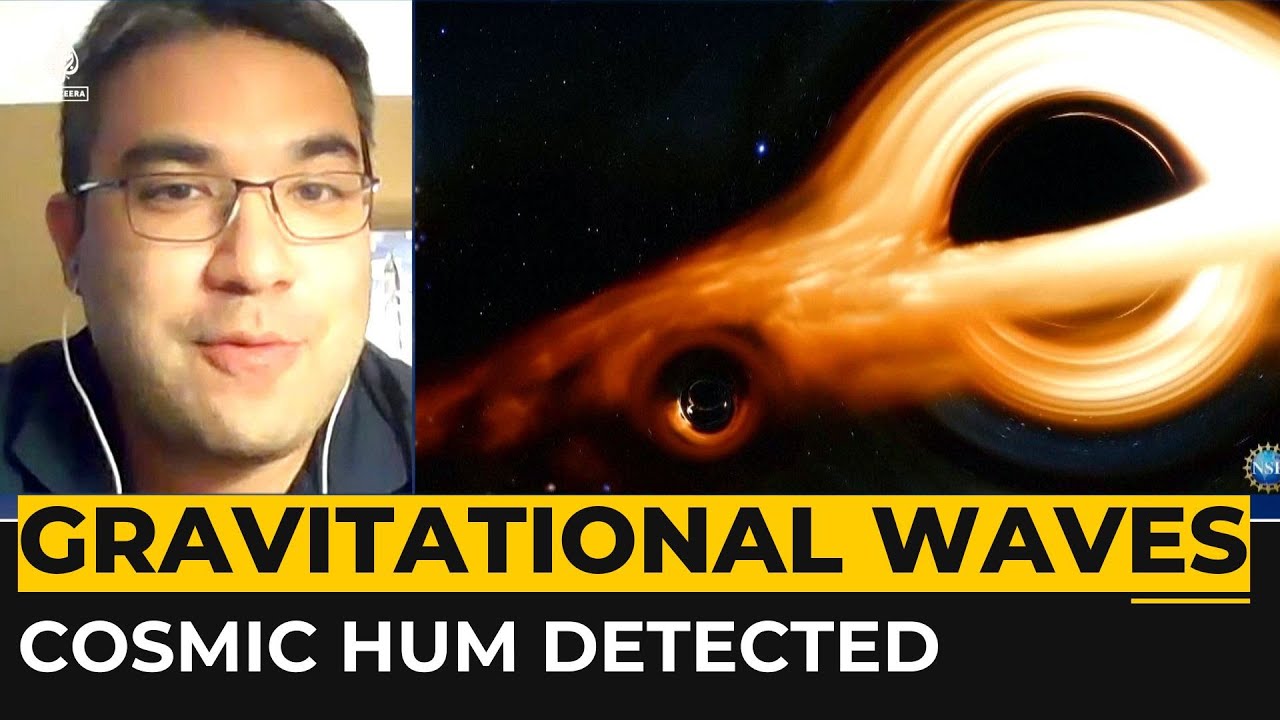
Scientists ‘hear’ cosmic hum from gravitational waves
Similar To Sitting In A Noisy Restaurant
The prevailing hypothesis suggests that the gravitational waves originate from pairs of supermassive black holes located at the centers of galaxies, gradually undergoing the process of merging. These black holes are of an inconceivable scale, often billions of times more massive than the Sun.
Daniel Reardon, a member of Australia's Parkes Pulsar Timing Array, explained that if these findings are confirmed, the detected waves would be a cumulative effect resulting from the countless supermassive black hole binary systems orbiting and merging at the cores of galaxies throughout the universe.
Keith likened the phenomenon to being in a bustling restaurant, where the collective activity of all these black holes generates a "background hum" akin to the simultaneous conversations of numerous people.
An alternative theory suggests that the detected gravitational waves could originate from the rapid expansion known as cosmic inflation, which occurred shortly after the Big Bang. This period, which remains concealed from direct observation, is believed to have occurred within a second after the birth of the universe.
Keith noted that the galaxies situated between Earth and the Big Bang might have obscured or overshadowed these waves, making their detection more challenging.
However, scientists anticipate that low-frequency gravitational waves in the future could provide further insights into this early expansion and potentially unravel the enigma of dark matter. Additionally, studying these waves could enhance understanding of the formation and evolution of black holes and galaxies.

Daniel James
Author
Daniel James is a distinguished gerontologist, author, and professional coach known for his expertise in health and aging.
With degrees from Georgia Tech and UCLA, including a diploma in gerontology from the University of Boston, Daniel brings over 15 years of experience to his work.
His credentials also include a Professional Coaching Certification, enhancing his credibility in personal development and well-being.
In his free time, Daniel is an avid runner and tennis player, passionate about fitness, wellness, and staying active.
His commitment to improving lives through health education and coaching reflects his passion and dedication in both professional and personal endeavors.

Karan Emery
Reviewer
Karan Emery, an accomplished researcher and leader in health sciences, biotechnology, and pharmaceuticals, brings over two decades of experience to the table. Holding a Ph.D. in Pharmaceutical Sciences from Stanford University, Karan's credentials underscore her authority in the field.
With a track record of groundbreaking research and numerous peer-reviewed publications in prestigious journals, Karan's expertise is widely recognized in the scientific community.
Her writing style is characterized by its clarity and meticulous attention to detail, making complex scientific concepts accessible to a broad audience. Apart from her professional endeavors, Karan enjoys cooking, learning about different cultures and languages, watching documentaries, and visiting historical landmarks.
Committed to advancing knowledge and improving health outcomes, Karan Emery continues to make significant contributions to the fields of health, biotechnology, and pharmaceuticals.
Latest Articles
Popular Articles