Surprising Avalanche Of Space Boulders Triggered By NASA's Asteroid Impact Mission
Surprising avalanche of space boulders triggered by NASA's asteroid impact mission after achieving a successful disruption of an asteroid's orbit last year. The mission involved the Double Asteroid Redirection Test spacecraft (DART) colliding with Dimorphos, a moon of the larger asteroid Didymos, at a remarkable speed of 14,000 miles per hour.
Author:Karan EmeryReviewer:Daniel JamesJul 26, 2023137.9K Shares2.3M Views
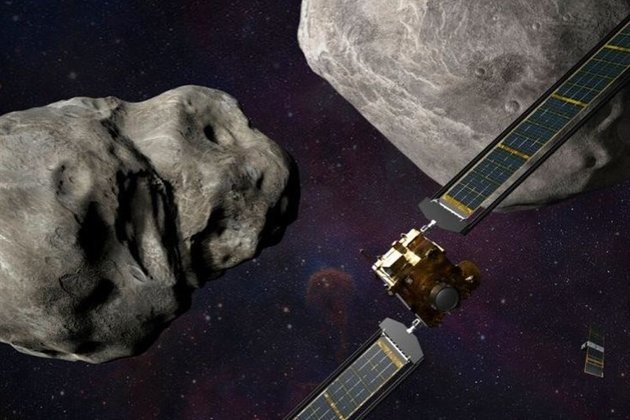
Surprising avalanche of space boulders triggered by NASA's asteroid impact missionafter achieving a successful disruption of an asteroid's orbit last year. The mission involved the Double Asteroid Redirection Test spacecraft (DART) colliding with Dimorphos, a moon of the larger asteroid Didymos, at a remarkable speed of 14,000 miles per hour.
The impact of the collision not only altered the trajectory of Dimorphos but also caused approximately 37 boulders to be dislodged from the asteroid. These events were documented through images captured by the Hubble telescope, providing valuable insights for NASA's research and efforts in planetary defense.
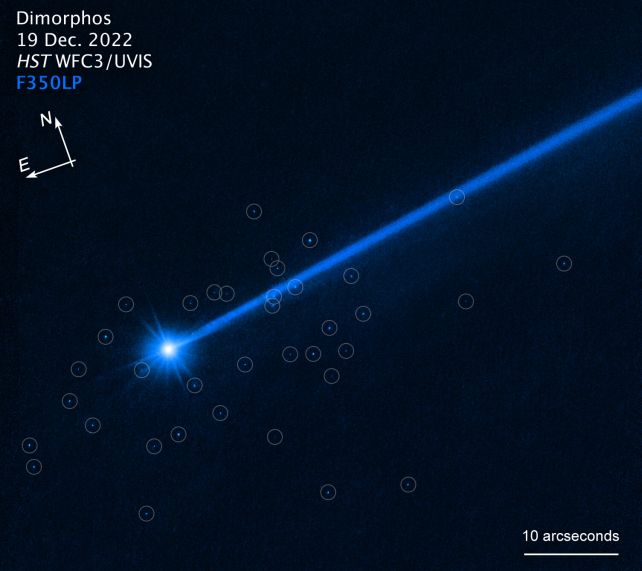
Following the DART mission's impact on Dimorphos, a fascinating discovery emerged. Boulders ranging in size from three to 22 feet across were found drifting away from the asteroid at a leisurely pace of about half a mile per hour. David Jewett, a planetary scientist from the University of California, Los Angeles, who closely monitored the changes using the Hubble telescope, revealed that these boulders had not been initially observed. The scientific team had been diligently studying the impact trail for months, making this newfound observation an intriguing surprise.
“„So, you know, the impact was at the end of September and I noticed the boulders in data from December, so it's a long time after - you would think - everything should be over. Impact is an impulse, it's an instantaneous bang. So you would think, naively, you will be able to see it all straight away.- David Jewett, a planetary scientist from the University of California, Los Angeles
In a surprising revelation, David Jewett, the planetary scientist from the University of California, Los Angeles, disclosed that the presence of boulders drifting away from the asteroid was entirely unexpected and not accounted for in the impact predictions. NASA further explained that these boulders were most likely already scattered across the asteroid's surface rather than being chunks that broke off after the collision with the DART spacecraft.
It's important to note that these boulders pose no threat to Earth. However, the images captured during this mission serve as a significant reminder that future asteroid impact missions may also result in unforeseen aftereffects, highlighting the need for continued vigilance and exploration in the field of planetary defense.
According to Jewitt, this marks one of the initial instances where scientists have comprehensive knowledge of an impact's details, specifically one caused by human intervention.
"We've seen other examples of impact between one asteroid and another and the trouble there is we don't know when the impact occurred," Jewitt said. "We see the debris but at some uncertain time after the impact, so the interpretation is clouded by not knowing when it happened, not knowing how big or how energetic the two asteroids were when they collided and so on, so it's not very well characterized."
"So, this is a case where, you know, we know the mass of the spacecraft, we know the speed of the spacecraft, so we know the energy. We know quite a lot about the impact," he continued. "And then the idea is to look at the consequences of a well-calibrated impact to see how the asteroid responds."
Jewitt mentioned that the upcoming Hera mission by the European Space Agency (ESA) will be dedicated to investigating the asteroid. The primary focus of this mission is to gather valuable data for potential asteroid deflection missions in the future. It is important to note that the Hera mission is scheduled to launch in October 2024, but it will take some time to reach the asteroid impact site, with an estimated arrival in December 2026, as confirmed by the ESA.
"They're gonna fly through these boulders on the way to seeing the targeted asteroid called Dimorphos and so … maybe they can study some of these boulders and figure out their properties better than we can get them from the ground," Jewitt said. "It's just a question of characterizing the products of a manmade impact into an asteroid to the best possibility that we can."
Conclusion
Continuous monitoring by the Hubble telescope will aid scientists in determining the trajectories of the boulders as they move away from the asteroid. This crucial data will enable them to pinpoint the exact locations from where these boulders originated. By understanding the launch points, researchers can gain valuable insights into the mechanisms and processes responsible for their initial ejection from the asteroid's surface.
Jump to

Karan Emery
Author
Karan Emery, an accomplished researcher and leader in health sciences, biotechnology, and pharmaceuticals, brings over two decades of experience to the table. Holding a Ph.D. in Pharmaceutical Sciences from Stanford University, Karan's credentials underscore her authority in the field.
With a track record of groundbreaking research and numerous peer-reviewed publications in prestigious journals, Karan's expertise is widely recognized in the scientific community.
Her writing style is characterized by its clarity and meticulous attention to detail, making complex scientific concepts accessible to a broad audience. Apart from her professional endeavors, Karan enjoys cooking, learning about different cultures and languages, watching documentaries, and visiting historical landmarks.
Committed to advancing knowledge and improving health outcomes, Karan Emery continues to make significant contributions to the fields of health, biotechnology, and pharmaceuticals.
Daniel James
Reviewer
Daniel James is a distinguished gerontologist, author, and professional coach known for his expertise in health and aging.
With degrees from Georgia Tech and UCLA, including a diploma in gerontology from the University of Boston, Daniel brings over 15 years of experience to his work.
His credentials also include a Professional Coaching Certification, enhancing his credibility in personal development and well-being.
In his free time, Daniel is an avid runner and tennis player, passionate about fitness, wellness, and staying active.
His commitment to improving lives through health education and coaching reflects his passion and dedication in both professional and personal endeavors.
Latest Articles
Popular Articles