The Pentagon’s Fight With Anthropic Points To A Deeper Divide In The AI Economy
Washington’s clash with artificial intelligence startup Anthropic has quickly become one of the most closely watched technology disputes in the country.
Author:Tyreece BauerReviewer:Elisa MuellerMar 19, 20268K Shares109.8K Views
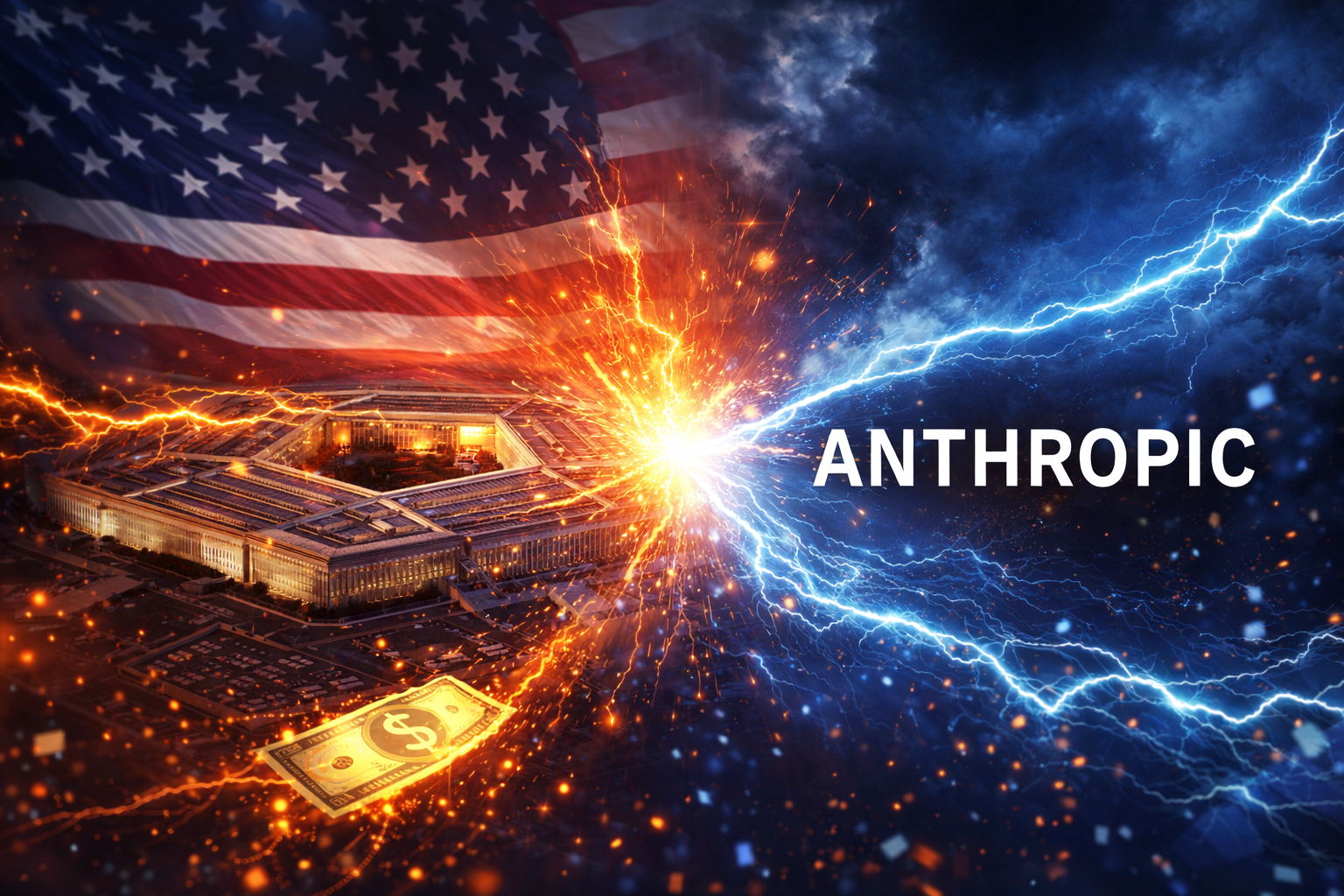
Washington’s clash with artificial intelligence startup Anthropic has quickly become one of the most closely watched technology disputes in the country. The Pentagon labeled the company a national security “supply chain risk,” effectively cutting it off from defense work. Anthropic responded with a lawsuit, arguing the move was retaliatory and unlawful. A federal court hearing is scheduled for later this month.
Much of the debate so far has focused on the immediate legal and ethical questions. Anthropic says the government punished it after the company refused to loosen restrictionson how its AI models can be used for surveillance and military applications. Defense officials say the military cannot rely on technology from a company unwilling to support lawful national security missions.
But the dispute also highlights a deeper divide inside the AI economy that is shaping how both government and industry approach artificial intelligence.
The debate is not only about who builds the most powerful models, but increasingly about who controls the systems and data that make those models useful in high stakes environments.
Over the past year, capable AI systems from companies such as Anthropic and OpenAI have fueled predictions that large language models will disrupt large parts of the software industry. Many investors now expect entire categories of software to be absorbed as AI systems replicate and automate core functions.
Those pressures are most visible in software as a service. Many SaaS (Software as a Service) products automate standardized workflows such as customer support, marketing analytics or document processing. These are precisely the kinds of tasks where general AI models can replicate existing tools with relative ease.
“A lot of the commentary assumes every new AI breakthrough wipes out entire sectors of software,” said investor and entrepreneur Elliott Broidy, who has been studying how artificial intelligence is being deployed in national security and investigative technology. “That tends to be true in horizontal markets where software is basically a bundle of interchangeable features. In specialized sectors, the advantage comes from domain expertise and proprietary data.”
In fields like intelligence analysis, financial crime investigations and regulatory compliance, AI systems operate inside operational platforms built on years of industry training data, investigative methods and analytical workflows. In those environments the AI model is only one component of a larger system.
“If you are operating in a complex investigative or national security environment you are not just plugging in a chatbot,” Broidy said. “You are integrating AI into a full investigative framework with proprietary datasets, analyst workflows and regulatory constraints. That is something generic models cannot replicate overnight.”
The distinction is already shaping how government agencies approach AI integration in sensitive systems. Defense agencies and intelligence organizations rely on software platforms that combine large proprietary datasets with specialized analytical tools refined through years of operational use. In those environments the AI model is only one component of a larger architecture.
Because these platforms are built around proprietary data pipelines and investigative workflows, they can integrate whichever AI model proves most effective. The infrastructure and domain expertise remain the core strategic asset.
“The model is important, but it is only one layer of the stack,” Broidy said. “In many cases the real moat is the data infrastructure and the domain expertise that surrounds it.”
The Pentagon’s decision to designate Anthropic a supply chain risksheds light on another reality. Washington is increasingly willing to use regulatory authority and procurement power to shape how AI companies operate.
The designation applied to Anthropic is typically used against foreign companies that pose national security threats. Applying it to a domestic AI developer represents a striking escalation and forces government contractors to reconsider whether they can rely on the company’s technology.
Some AI companies have sought to place limits on how their systems can be used, particularly when it comes to surveillance or autonomous weapons. Government officials argue that decisions about national security capabilities ultimately belong to elected governments, not private technology companies.
At the same time, federal agencies are becoming increasingly dependent on the private sector for advanced AI capabilities. This dynamic is reshaping the relationship between Washington and Silicon Valley.
As artificial intelligence becomes embedded in sectors such as investigations, compliance and national security, companies that control specialized data and operational platforms are emerging as critical players in the technology ecosystem. In these environments, organizations prioritize reliability and institutional trust over novelty.
AI is integrated into long-standing workflows and regulatory frameworks, making the model itself only one layer of a much larger system. In that sense, the struggle between Anthropic and the Pentagon is not just about one company or one contract, but reflective of a broader contest over who ultimately controls how powerful AI systems are deployed.

Tyreece Bauer
Author
A trendsetter in the world of digital nomad living, Tyreece Bauer excels in Travel and Cybersecurity. He holds a Bachelor's degree in Computer Science from MIT (Massachusetts Institute of Technology) and is a certified Cybersecurity professional.
As a Digital Nomad, he combines his passion for exploring new destinations with his expertise in ensuring digital security on the go. Tyreece's background includes extensive experience in travel technology, data privacy, and risk management in the travel industry.
He is known for his innovative approach to securing digital systems and protecting sensitive information for travelers and travel companies alike. Tyreece's expertise in cybersecurity for mobile apps, IoT devices, and remote work environments makes him a trusted advisor in the digital nomad community.
Tyreece enjoys documenting his adventures, sharing insights on staying secure while traveling and contributing to the digital nomad lifestyle community.

Elisa Mueller
Reviewer
Elisa Mueller, a Kansas City native, grew up surrounded by the wonders of books and movies, inspired by her parents' passion for education and film.
She earned bachelor's degrees in English and Journalism from the University of Kansas before moving to New York City, where she spent a decade at Entertainment Weekly, visiting film sets worldwide.
With over 8 years in the entertainment industry, Elisa is a seasoned journalist and media analyst, holding a degree in Journalism from NYU. Her insightful critiques have been featured in prestigious publications, cementing her reputation for accuracy and depth.
Outside of work, she enjoys attending film festivals, painting, writing fiction, and studying numerology.
Latest Articles
Popular Articles