Typeracer Cheat - How To Improve Your Typing Speed Without Cheating?
Typeracer is a popular online typing game that challenges players to type as quickly and accurately as possible. While some may be tempted to use a Typeracer cheat to gain an edge, it's important to remember that true improvement comes from practice and dedication.
Author:Tyreece BauerReviewer:Gordon DickersonMay 04, 2023179.7K Shares2.5M Views
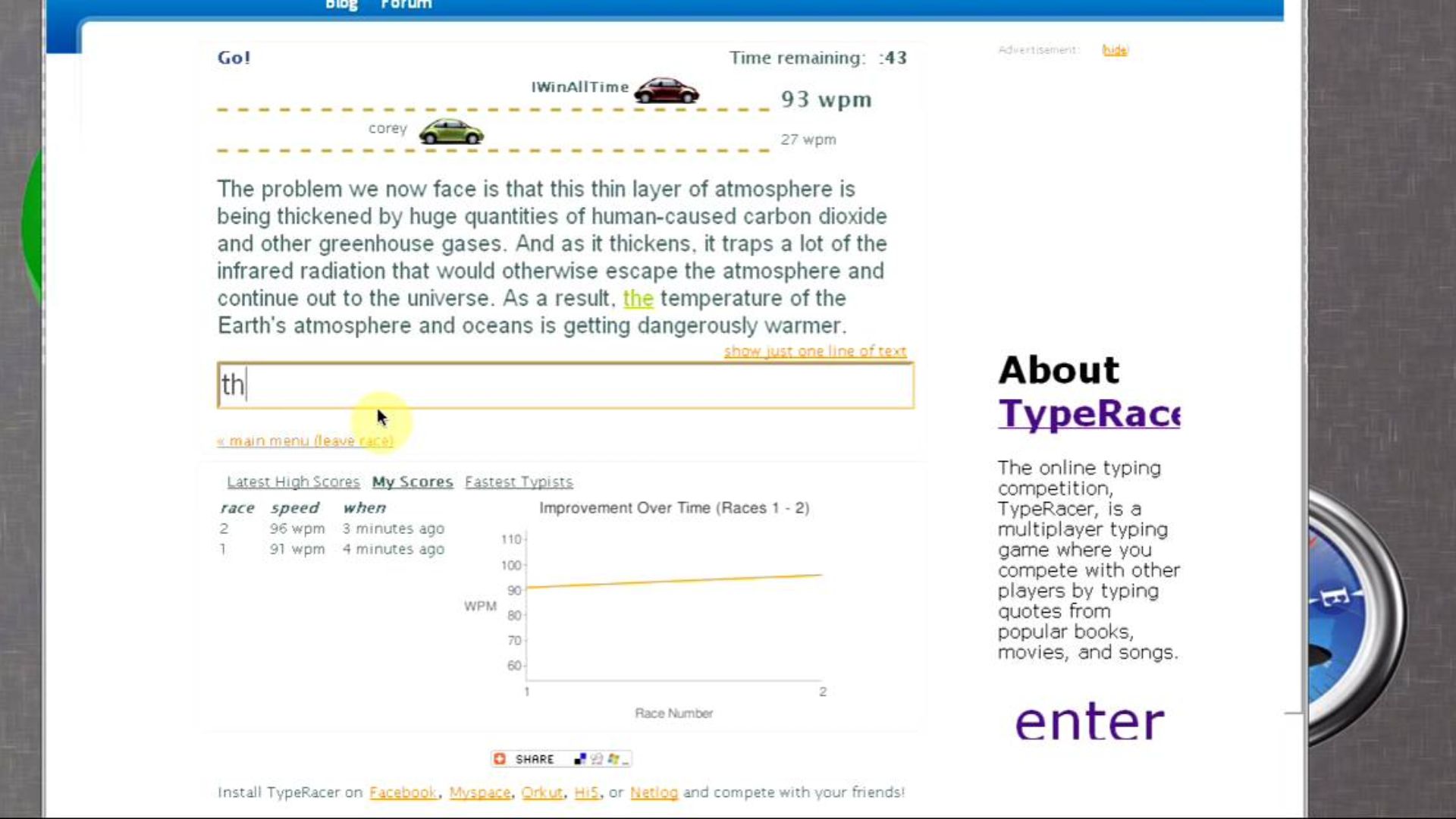
If you are looking for a way to improve your typing speed without using any unfair advantages, you're in the right place.
Typeracer is a popular online typing game that challenges players to type as quickly and accurately as possible. While some may be tempted to use a Typeracer cheatto gain an edge, it's important to remember that true improvement comes from practice and dedication.
The Importance Of Typing Speed
Typing has become an essential skill for many professions. From data entry to journalism, typing is a crucial part of many jobs. Moreover, as our lives have shifted increasingly online, typing has become an integral part of our daily communication.
Whether you're writing an email, sending a text message, or chatting with friends on social media, typing speed can make a big difference in how quickly and effectively you communicate. In fact, studies have shown that improving your typing speed can save you hours of time each week.
Typeracer Cheat - Is It Worth The Risk?
First and foremost, using typeracer cheat codes goes against the spirit of the game. Typeracer is meant to be a fun and challenging way to improve your typing skills. Cheating takes away the challenge and the sense of accomplishment that comes with improving your skills through hard work.
Furthermore, using cheats can have serious consequences. If you're caught using a typeracer cheat, you could be banned from the game or even face legal consequences if you're found to be using illegal software.
So, while it may be tempting to take the easy way out, we strongly advise against using typeracer cheat codes. Instead, let's focus on some legitimate ways to improve your typing speed.

Tips And Tricks For Improving Your Typing Speed
Now that we've established the importance of typing speed and why cheating is not the answer, let's explore some legitimate ways to improve your typing skills.
Practice, Practice, Practice
The old adage "practice makes perfect" holds true when it comes to typing. The more you practice, the better you'll get. Set aside time each day to practice typing, and try to increase your speed and accuracy each time.
There are many online typing tutors and games available that can help you improve your skills. Some popular options include Typing.com, Nitrotype, and of course, Typeracer.
Use Proper Typing Technique
One of the biggest barriers to improving your typing speed is using incorrect technique. Many people type with just a few fingers or use a "hunt and peck" approach, which can slow you down and make it more difficult to hit the right keys.
To improve your typing speed, focus on using proper technique. This means using all ten fingers, keeping your hands in the proper position, and using a light touch on the keys. It may take some practice to get used to this approach, but it will pay off in the long run.
Take Breaks
Typing for extended periods can be tiring and can lead to mistakes. To avoid fatigue and improve your accuracy, be sure to take regular breaks. Stand up, stretch, and give your eyes a break by looking away from the screen.

I made an extension that cheats on Typeracer
Improve Your Keyboarding Setup
Your keyboard and workstation setup can have a big impact on your typing speed and comfort. Make sure your keyboard is positioned correctly and at the right height. Consider investing in an ergonomic keyboard and mouse to reduce strain on your hands and wrists.
Increase Your WPM (Words Per Minute)
WPM is the standard measurement for typing speed. The average typing speed is around 40 WPM, while professional typists can type at speeds of 80 WPM or more. To improve your typing speed, focus on increasing your WPM over time.
Start by setting a baseline measurement of your current WPM using an online typing test. Then, set a goal for yourself to increase your speed by a certain amount each week. Track your progress and celebrate your milestones along the way.
Read And Type At The Same Time
To improve your typing accuracy and speed, try reading and typing at the same time. This can help you get used to typing without looking at the keyboard, which is a crucial skill for improving your speed. Start with simple texts and work your way up to more complex materials.
Play Typing Games
Typing games are a fun and engaging way to improve your typing speed. They often involve typing words or phrases as quickly and accurately as possible. Some popular typing games include TypeRacer, Typing Attack, and Typing Club.
Join A Typing Community
Joining a typing community can be a great way to stay motivated and connect with other typists. There are many online communities and forums dedicated to typing, where you can share tips and tricks, compete in challenges, and get feedback on your skills.
Learn Keyboard Shortcuts
Using keyboard shortcuts can save you time and improve your efficiency. Take the time to learn common keyboard shortcuts for your favorite programs and applications, such as Ctrl+C (copy), Ctrl+V (paste), and Ctrl+Z (undo).
Stay Positive And Persistent
Improving your typing speed takes time and effort. Don't get discouraged if you don't see immediate results. Stay positive, keep practicing, and celebrate your progress along the way.
How To Prevent Typing Fatigue?
Typing for long periods of time can cause fatigue and strain in the hands, wrists, and fingers. This can lead to discomfort and even injury over time. Here are some tips for preventing typing fatigue:
- Take Breaks- Take frequent breaks to rest your hands and wrists. Try to take a break every hour or so to stretch your fingers and give your hands a break.
- Use Proper Technique- Make sure to use proper typing techniques, such as keeping your wrists straight and your fingers relaxed. Avoid typing with your wrists bent or in an awkward position.
- Use Ergonomic Equipment- Invest in an ergonomic keyboard and mouse to reduce strain on your hands and wrists. These devices are designed to be more comfortable and reduce the risk of injury.
- Stretch- Stretch your fingers, wrists, and hands before and after typing. This can help prevent stiffness and improve circulation in the hands and wrists.
- Exercise- Regular exercise can help improve circulation and reduce the risk of injury. Consider incorporating exercises that target the hands and wrists, such as wrist curls or finger extensions.
- Use Voice Typing - If possible, consider using voice typing to give your hands a break. This can also help reduce strain on the neck and shoulders.
By following these tips, you can prevent typing fatigue and reduce the risk of injury over time.
Typing Speed V/S Typing Accuracy - Which Is More Important?
Typing speed and typing accuracy are both important skills for effective communication in today's digital age. However, there is a debate about which is more important. Here are some arguments for both sides:
Typing Speed
- Increased Productivity - Typing faster can help you get more work done in less time, which can increase productivity and efficiency.
- Improved Communication - Faster typing can also improve communication by allowing you to respond quickly to messages and emails.
- Competitive Advantage- In some industries, such as data entry or transcription, typing speed is a crucial factor in job performance. Those with faster typing skills may have a competitive advantage in these fields.
Typing Accuracy
- Reduced Errors- Typing accuracy is essential for ensuring your message is communicated clearly and without errors. This can reduce the risk of misunderstandings and mistakes.
- Professionalism- Accurate typing skills are often associated with professionalism and attention to detail. This can be important for creating a positive impression in the workplace or in other professional settings.
- Quality Control- In some industries, such as legal or medical transcription, accuracy is essential for ensuring that important information is recorded correctly. Errors can have serious consequences in these fields.
People Also Ask
What Is The Average Typing Speed For Professionals?
The average typing speed for professionals varies depending on the industry and job role but generally ranges from 50 to 80 words per minute.
How Can I Test My Typing Speed?
You can test your typing speed using online typing tests or software that provides real-time feedback on your speed and accuracy.
Are There Any Exercises I Can Do To Improve My Typing Accuracy?
Yes, there are exercises you can do to improve your typing accuracy, such as practicing touch typing, focusing on finger placement, and using typing software that provides feedback on your accuracy.
What Are Some Common Typing Mistakes To Avoid?
Some common mistakes to avoid include typing too quickly and making errors, using the wrong finger placement, and not proofreading your work.
How Important Is Typing Accuracy In The Workplace?
Typing accuracy is important in the workplace for creating a positive impression and ensuring that important information is recorded correctly, particularly in industries such as legal or medical transcription.
Conclusion
Improving your typing speed is an essential skill in today's digital age. While it may be tempting to use typeracer cheat codes or other shortcuts, these approaches do not provide a true sense of accomplishment or lasting results.
Instead, focus on practicing proper technique, increasing your WPM, and engaging in fun and challenging typing games and activities. With persistence and dedication, you can improve your typing speed and accuracy, and take your digital communication skills to the next level.

Tyreece Bauer
Author
A trendsetter in the world of digital nomad living, Tyreece Bauer excels in Travel and Cybersecurity. He holds a Bachelor's degree in Computer Science from MIT (Massachusetts Institute of Technology) and is a certified Cybersecurity professional.
As a Digital Nomad, he combines his passion for exploring new destinations with his expertise in ensuring digital security on the go. Tyreece's background includes extensive experience in travel technology, data privacy, and risk management in the travel industry.
He is known for his innovative approach to securing digital systems and protecting sensitive information for travelers and travel companies alike. Tyreece's expertise in cybersecurity for mobile apps, IoT devices, and remote work environments makes him a trusted advisor in the digital nomad community.
Tyreece enjoys documenting his adventures, sharing insights on staying secure while traveling and contributing to the digital nomad lifestyle community.

Gordon Dickerson
Reviewer
Gordon Dickerson, a visionary in Crypto, NFT, and Web3, brings over 10 years of expertise in blockchain technology.
With a Bachelor's in Computer Science from MIT and a Master's from Stanford, Gordon's strategic leadership has been instrumental in shaping global blockchain adoption. His commitment to inclusivity fosters a diverse ecosystem.
In his spare time, Gordon enjoys gourmet cooking, cycling, stargazing as an amateur astronomer, and exploring non-fiction literature.
His blend of expertise, credibility, and genuine passion for innovation makes him a trusted authority in decentralized technologies, driving impactful change with a personal touch.
Latest Articles
Popular Articles