What To Check On A Trailer Before A Long Road Trip?
Hitching up a trailer for a long drive feels simple right up until something goes wrong a hundred miles from home, and most of what goes wrong traces back to something that a five-minute check would have caught.
Author:Frazer PughReviewer:Dexter CookeOct 09, 20262 Shares41 Views
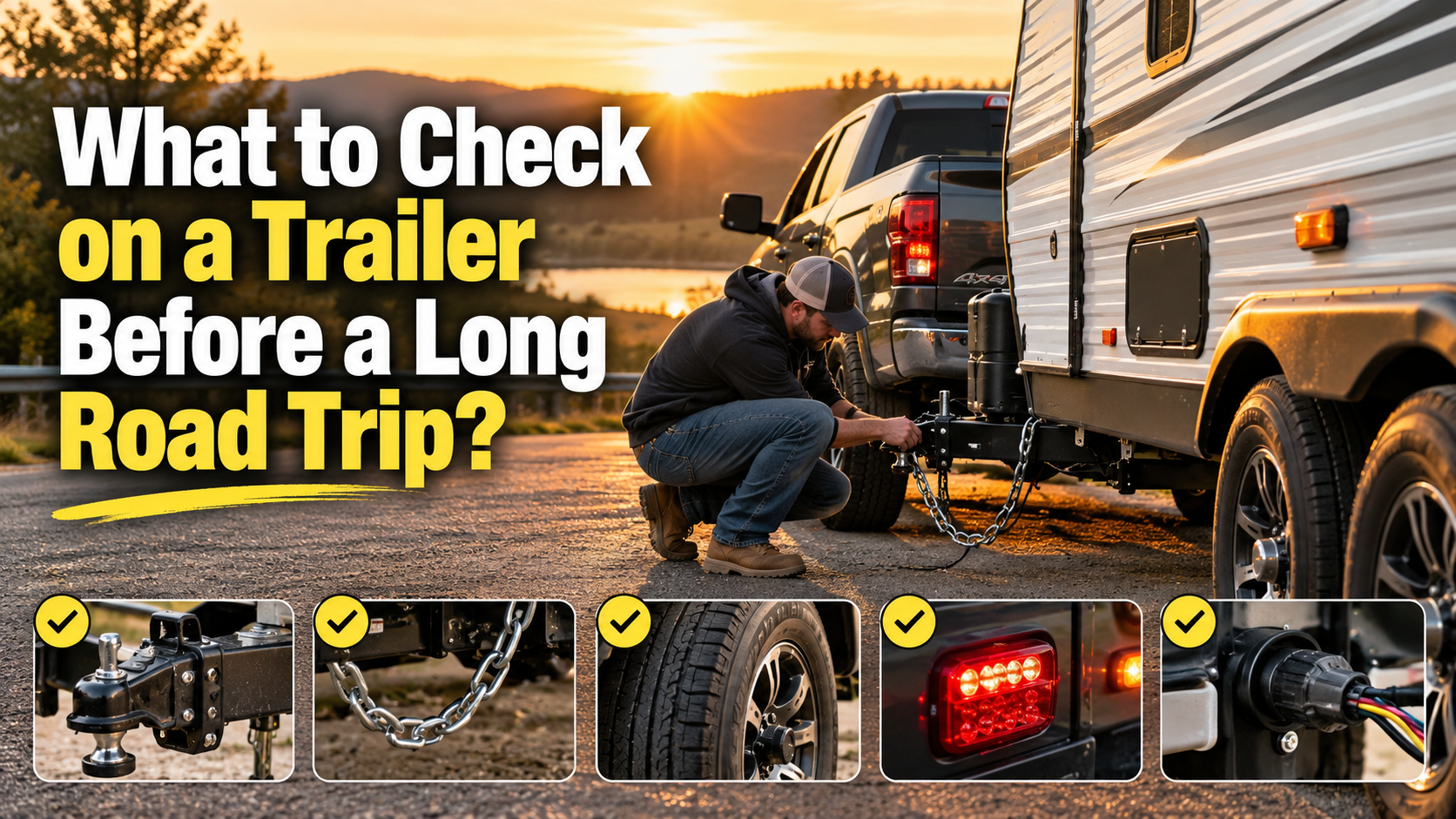
Hitching up a trailer for a long drive feels simple right up until something goes wrong a hundred miles from home, and most of what goes wrong traces back to something that a five-minute check would have caught. What to check on a trailer before a long road trip?
Check the hitch and safety chains, every light, tire condition and pressure, the brakes if the trailer has them, and how the load is balanced, before you ever reach the highway.
That covers the basics, but a couple of these points trip up even people who have towed before. A mismatched hitch ball and an unevenly loaded trailer cause more trouble on the road than almost anything else, so they are worth a closer look before the trip.
Why Does A Pre-Trip Check Matter More For A Long Trip?
A short errand forgives small mistakes. A long trip does not, because a loose connection, a weak light or an underinflated tire has hours of vibration, speed and heat to turn into a real problem instead of a minor annoyance. According to a Michigan trailer dealer's guide for new trailer owners, an incorrectly sized hitch ball is one of the most common causes of trailer accidents, which makes it a good place to start.
The good news is that none of this takes special tools or expertise. A flashlight, a tire gauge and ten minutes in the driveway cover almost everything on the list, and doing it before the trip is always easier than doing it on the shoulder of a highway with trucks going by.
Start With The Hitch And The Connection
Match the ball size on your tow vehicle to the coupler on the trailer. A ball that looks close enough but is not the exact size can let the trailer pop loose under the right bump or turn. Once it is hitched, cross the safety chains under the tongue, so they form a cradle that can catch the trailer if it ever separates, rather than letting the tongue drop straight to the road.
If the trailer has a weight-distributing hitch or a tongue weight scale, use them. Tongue weight should generally land around 10 to 15% of the trailer's total loaded weight. Too little tongue weight lets the trailer sway, and too much overloads the back of the tow vehicle.
While you are at the hitch, give the coupler a shake with the trailer jack raised and the chains slack. It should feel snug on the ball with no play, and the jack itself should be fully retracted and secured before you pull away.
Check Every Light, Not Just The Ones You Can See
Trailer lights are easy to skip because the driver's seat is the one place you cannot see most of them. U-Haul's own towing guidance is direct about this: all trailers must have functioning brake and turn signal lights, and drivers should confirm that every trailer and tow vehicle light works and that the connecting wires have enough slack for turns without dragging on the road.
Have someone stand behind the trailer while you run the tail lights, both turn signals and the brakes. If a lamp is out or flickering, it is worth replacing before the trip rather than hoping it survives a few hundred miles of vibration. A supplier of replacement trailer and marker lightsis a reasonable place to compare options if the fix is more than a loose bulb.
What About Tires, Brakes And Mirrors?
Check the tire pressure and tread on the trailer's tires as carefully as you check your own vehicle's, since trailer tires sit unused for long stretches and can lose air or age out without anyone noticing. If the trailer has its own brakes, set the brake controller for the current load and test it at low speed in an empty lot before you are on the highway.
Towing mirrors or extended side mirrors matter more than most drivers expect. A trailer wider than your tow vehicle creates a blind spot that your factory mirrors were never designed to cover, and that gap is exactly where another vehicle tends to sit during a lane change.
What Belongs In A Roadside Kit For The Trailer?
A trailer breakdown kit is smaller than most people expect, but it is worth having before a long trip rather than after a flat on the shoulder. A properly inflated spare that matches the trailer's bolt pattern, a lug wrench, a jack rated for the trailer's loaded weight and a wheel chock cover most roadside tire problems.
Add a handful of spare fuses for the trailer's wiring, a flashlight, basic hand tools and a tire pressure gauge, and most small trailer problems become a short roadside stop instead of a call for a tow. Keep the kit in the tow vehicle, not stored inside the trailer itself, so it is reachable even if the trailer is loaded to the ceiling.
Load It Right Before You Add The Miles
Aim for roughly 60% of the trailer's weight toward the front, near the axle, and 40% toward the rear. Front-heavy loads tow more predictably than rear-heavy ones, which tend to sway. Secure everything with tie-downs rather than trusting gravity and the trailer's walls, since a shift in cargo partway through a trip can throw off the balance you worked out in the driveway.
What Should You Do If The Trailer Starts To Sway?
Stay calm and keep the steering wheel steady. Resist the urge to make a sharp correction, since a sudden steering movement is the thing most likely to turn a sway into a loss of control. Ease off the accelerator gradually instead of braking hard, which lets the trailer settle behind you rather than pushing against it.
If sway becomes a repeated problem on a particular trailer, it is usually a sign that the load is too far back, the tongue weight is too light, or the trailer needs sway-control hardware rather than a driving fix.
Your Next Step Is A Driveway Walk-Around
Before you pull out of the driveway, walk the full loop: hitch, chains, tires, lights, mirrors and load. Then repeat the light check at your first fuel stop, since that is when a loose connection from the first few miles of vibration tends to show up, and it is far easier to tighten a plug in a gas station lot than on the shoulder of an interstate an hour later.
Jump to
Why Does A Pre-Trip Check Matter More For A Long Trip?
Start With The Hitch And The Connection
Check Every Light, Not Just The Ones You Can See
What About Tires, Brakes And Mirrors?
What Belongs In A Roadside Kit For The Trailer?
Load It Right Before You Add The Miles
What Should You Do If The Trailer Starts To Sway?
Your Next Step Is A Driveway Walk-Around

Frazer Pugh
Author
Frazer Pugh is a distinguished expert in finance and business, boasting over 6 years of experience. Holding an MBA in Finance from Stanford University, Frazer's credentials underscore his authority and expertise in the field.
With a successful track record in executive roles and as a published author of influential articles on financial strategy, his insights are both deep and practical.
Beyond his professional life, Frazer is an avid traveler and culinary enthusiast, drawing inspiration from diverse cultures and cuisines.
His commitment in delivering trustworthy analysis and actionable advice reflects his dedication to shaping the world of finance and business, making a significant impact through his work.

Dexter Cooke
Reviewer
Dexter Cooke is an economist, marketing strategist, and orthopedic surgeon with over 20 years of experience crafting compelling narratives that resonate worldwide.
He holds a Journalism degree from Columbia University, an Economics background from Yale University, and a medical degree with a postdoctoral fellowship in orthopedic medicine from the Medical University of South Carolina.
Dexter’s insights into media, economics, and marketing shine through his prolific contributions to respected publications and advisory roles for influential organizations.
As an orthopedic surgeon specializing in minimally invasive knee replacement surgery and laparoscopic procedures, Dexter prioritizes patient care above all.
Outside his professional pursuits, Dexter enjoys collecting vintage watches, studying ancient civilizations, learning about astronomy, and participating in charity runs.
Latest Articles
Popular Articles